
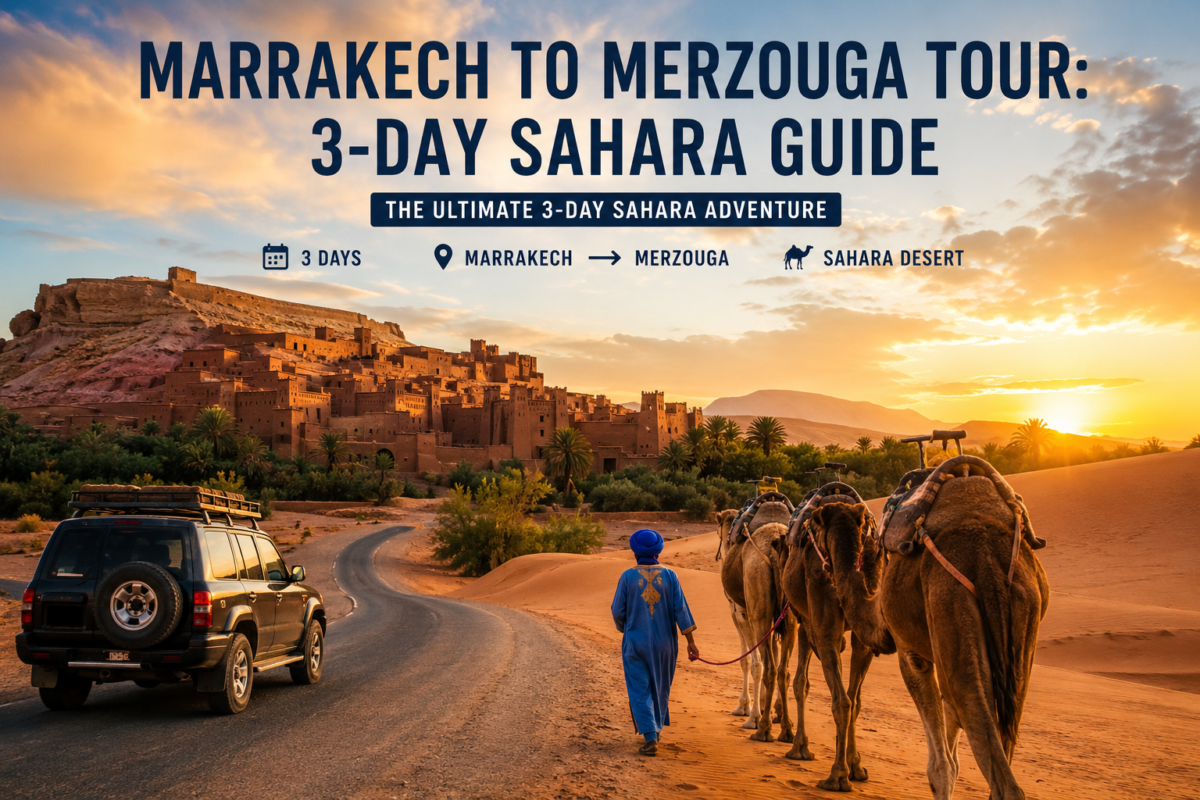
Marrakech to Merzouga Tour: 3 Days Through the Atlas Mountains and Sahara Desert
A Marrakech to Merzouga Tour is a compact way to experience some of southern Morocco’s most memorable landscapes. In three days, the journey travels from Marrakech across the High Atlas Mountains, past historic kasbahs and oasis valleys, to the Erg Chebbi dunes on the edge of the Sahara.
The itinerary typically includes Ait Ben Haddou, Ouarzazate, the Dades region, Todra Gorge, Merzouga, a sunset camel trek, and an overnight desert camp. It covers a considerable amount of ground, so travelers should expect substantial driving as well as sightseeing. For visitors with limited time who want to see the Sahara from Marrakech, the route offers an efficient combination of scenery, culture, and desert adventure.
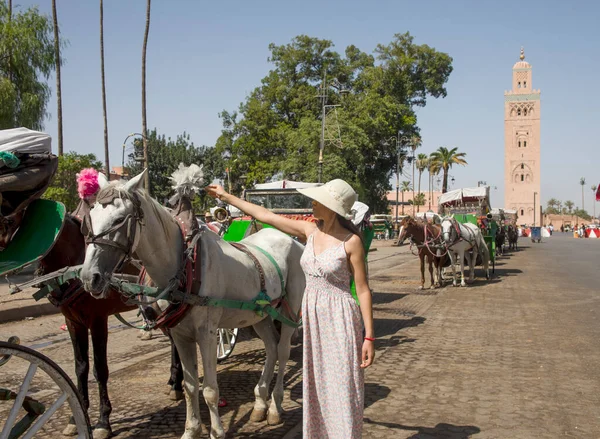
Marrakech to Merzouga Tour at a Glance
The three-day itinerary can be summarized as follows:
- Day 1: Marrakech – High Atlas Mountains – Tizi n’Tichka – Ait Ben Haddou – Ouarzazate – Valley of Roses – Boumalne Dades.
- Day 2: Boumalne Dades – Todra Gorge – southeastern Morocco – Merzouga – Erg Chebbi camel trek – Sahara desert camp.
- Day 3: Sunrise at Erg Chebbi – breakfast – return journey to Marrakech.
The first two days introduce the changing geography of southern Morocco, while the Sahara experience is the centerpiece of the second evening. The third day is primarily a return journey and is usually the most driving-intensive part of the itinerary.
Why Choose a Marrakech to Merzouga Desert Tour?
Few short itineraries reveal such varied landscapes in such a limited amount of time. Marrakech gives way to the High Atlas, mountain passes lead to earthen fortified settlements, and green valleys gradually transition into the arid landscapes surrounding Erg Chebbi.
The attraction is not only geographical. The route passes communities with distinctive architecture, agriculture, food traditions, and histories. Stops at places such as Ait Ben Haddou and Todra Gorge provide opportunities to leave the vehicle and experience these landscapes at a slower pace.
The trade-off is travel time. A three-day tour prioritizes reaching Merzouga and returning to Marrakech efficiently. Travelers who enjoy slower mornings, longer walks, or more spontaneous stops may prefer a four- or five-day itinerary instead.
Day 1: Marrakech to Boumalne Dades
The journey begins with an early departure from Marrakech. Leaving early provides more time for mountain viewpoints and sightseeing before reaching the overnight stop. Travelers researching the city before or after their desert trip can also consult Morocco’s official tourism destination overview for Marrakesh.
Crossing the High Atlas Mountains
After leaving the city, the road climbs into the High Atlas Mountains and crosses the Tizi n’Tichka Pass. The surroundings change quickly as urban scenery gives way to mountain slopes, rocky peaks, valleys, and villages built into the landscape.
This is a scenic but winding section of the journey. Travelers who are prone to motion sickness may want to prepare before departure. Viewpoint stops also provide welcome breaks and opportunities for photographs.
Visiting Ait Ben Haddou
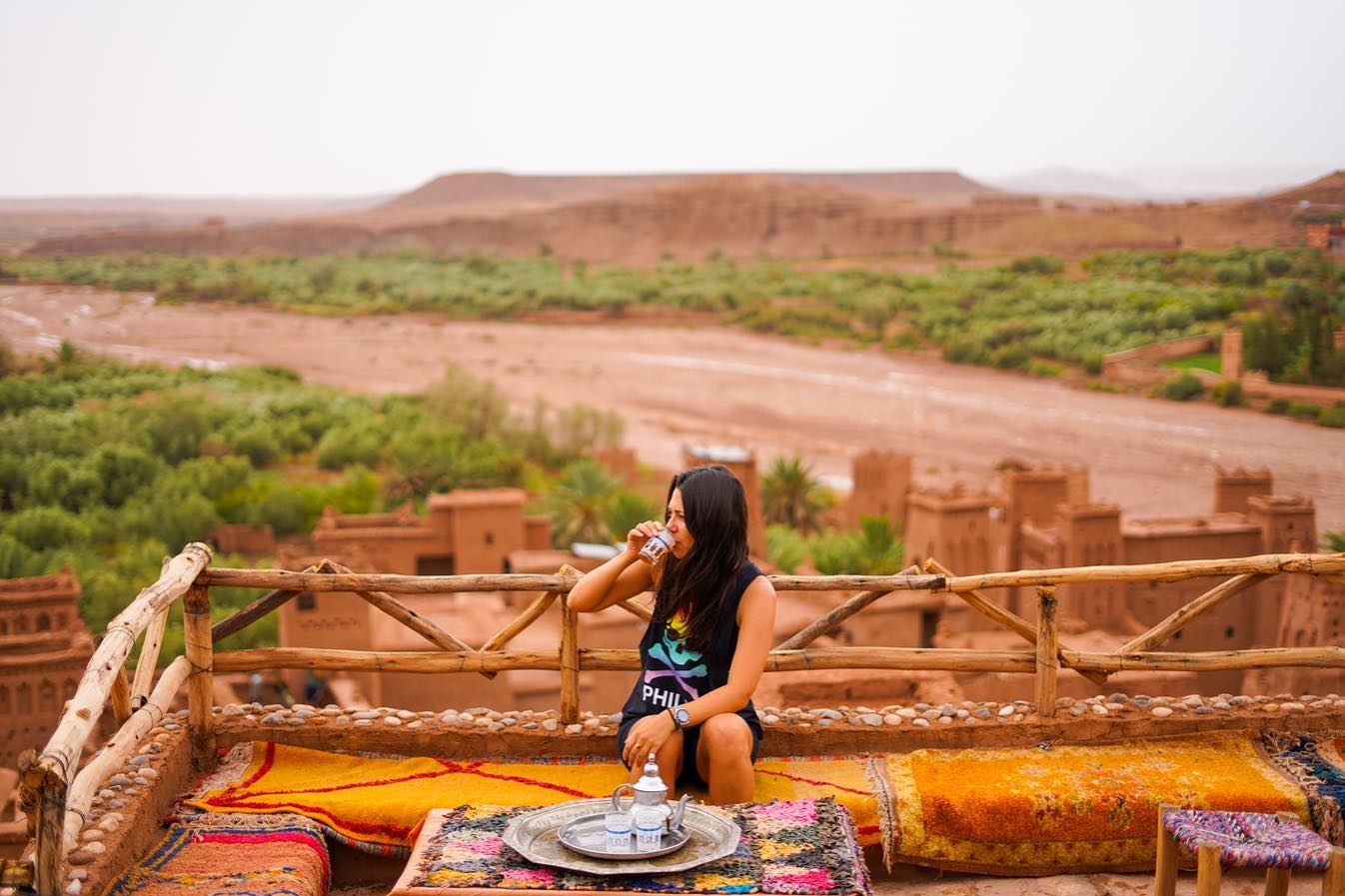
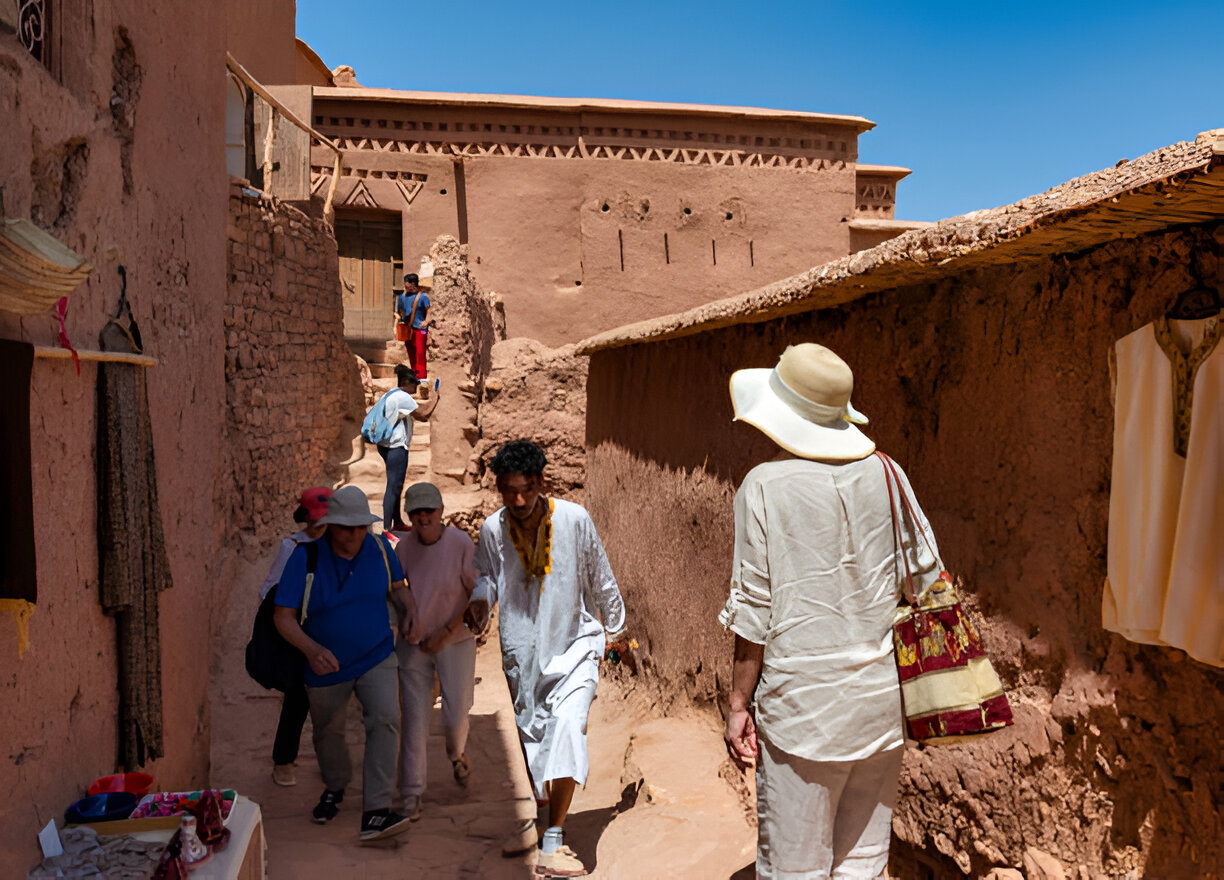
Beyond the mountain pass, the route reaches Ait Ben Haddou, a historic fortified settlement and UNESCO World Heritage Site. Its earthen buildings demonstrate the traditional construction techniques associated with southern Morocco’s pre-Saharan architecture.
Allowing time to walk through the ksar makes the visit more rewarding. Narrow passages lead between traditional structures, while higher viewpoints reveal the surrounding valley and arid landscape. The area is also widely known as a filming location for international productions.
Travelers who are not planning an overnight Sahara journey can visit the area on an Ouarzazate and Ait Ben Haddou Day Trip from Marrakech. On the three-day desert route, however, Ait Ben Haddou works naturally as a sightseeing stop on the way southeast.
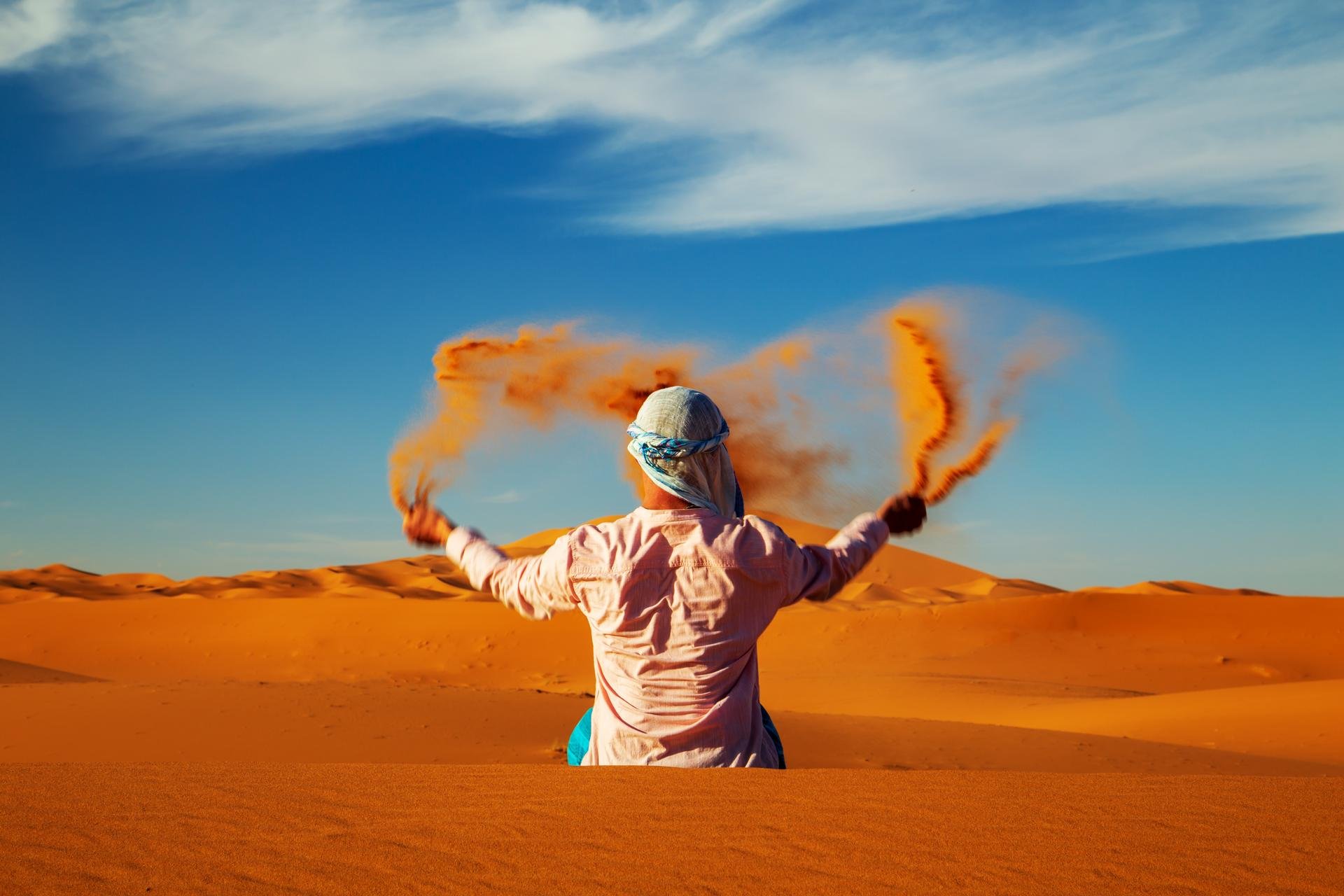
Ouarzazate and the Road to Dades
From Ait Ben Haddou, the journey continues toward Ouarzazate and the surrounding southern Morocco region. Often described as a gateway to the desert, Ouarzazate is particularly associated with filmmaking and the studios and dramatic landscapes found around the city.
Beyond Ouarzazate, the route continues through increasingly quiet countryside toward the Valley of Roses and Boumalne Dades. Agricultural areas, rocky hills, oasis vegetation, and small settlements create a landscape noticeably different from both Marrakech and the High Atlas.
The first day generally ends around Boumalne Dades, where travelers have dinner and spend the night before continuing east the following morning.
Day 2: Boumalne Dades to Merzouga
Day two moves deeper into southeastern Morocco. After breakfast, the journey leaves the Dades region and continues toward Tinghir and Todra Gorge. The scenery becomes progressively drier, although palm groves, cultivated areas, and villages continue to appear along river valleys and oases.
Walking Through Todra Gorge
Todra Gorge is one of the region’s best-known natural sights. Towering limestone walls narrow around the valley, creating an impressive contrast with the surrounding arid terrain. The area attracts sightseers, walkers, photographers, and climbers.
A short walk provides a useful break from the vehicle and a closer look at the rock formations. After the visit, the route continues toward the desert region covered by Morocco’s official tourism information for Errachidia, Midelt and Merzouga.
Oases, Ksour and the Landscapes of Southeastern Morocco
Oasis valleys are among the defining features of this part of Morocco. Palm groves appear as green corridors against dry mountains and plains, while traditional villages and old ksour illustrate how communities developed around water and cultivated land.
The Ziz Valley is particularly important on routes connecting Merzouga with Errachidia, Midelt, and Fes. Depending on the exact itinerary and road used, travelers continuing north after Merzouga can see its extensive palm-filled oasis landscapes. As the route approaches Merzouga from the west, the environment becomes increasingly desert-like and the dunes of Erg Chebbi eventually dominate the horizon.
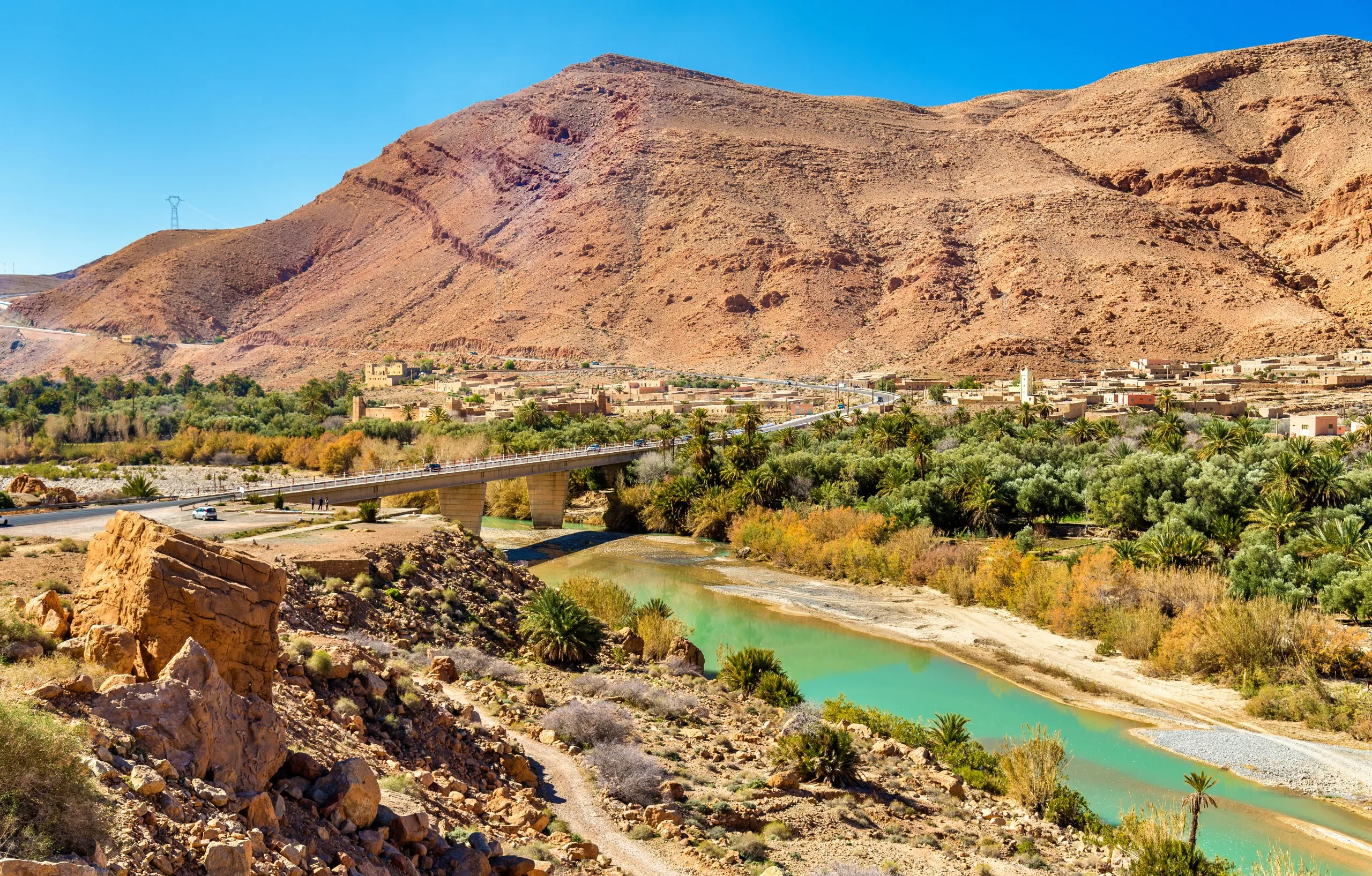
Arriving in Merzouga and Erg Chebbi
Merzouga lies beside Erg Chebbi, the large dune field that makes the area one of Morocco’s best-known Sahara destinations. Arrival is normally timed so guests can prepare for the desert excursion before sunset.
A camel trek provides a slow-paced introduction to the dunes. As the afternoon light softens, the sand shifts through shades of gold and orange, making this one of the most photogenic parts of the trip. Exact timing depends on the season, weather, and tour arrangements.
Camel Trekking at Sunset
The camel ride usually leads from the edge of the dunes toward the desert camp. The pace provides time to take in the landscape away from the road, and photography stops may be possible along the way.
Travelers should wear practical clothing for the ride and keep essential items such as a camera, water, sunglasses, and an extra layer readily accessible. Sand and temperature changes are part of the environment, so a small day bag is more convenient than carrying larger luggage into the dunes.
Overnight in a Sahara Desert Camp
After reaching camp, guests typically have a Moroccan dinner and spend the evening in the desert. Depending on the camp and conditions, the experience may include local music or time around a campfire. Others may prefer simply to enjoy the quieter surroundings and night sky.
Camp standards vary. Traditional-style camps focus on a simpler desert experience, while luxury options can offer more comfortable bedding and private facilities. Travelers should check what their chosen tour includes rather than assuming all camps provide the same facilities.
Day 3: Merzouga to Marrakech
The final day often begins before or around sunrise. Early morning light over Erg Chebbi is one of the most memorable views of the trip, particularly when the dunes are still quiet.
After breakfast and the transfer back from the camp area, the return to Marrakech begins. This is a long road journey, so stops for meals, stretching, rest, and viewpoints are important. The changing landscape helps break up the drive as desert plains gradually give way to valleys and mountains.
Comfortable clothing, water, snacks, and anything needed for motion sickness can make the return easier. Arrival in Marrakech is generally later in the day or evening, although actual timing can vary because of traffic, road conditions, stops, and seasonal factors.
How Demanding Is a 3-Day Marrakech to Merzouga Tour?
The distance between Marrakech and Merzouga makes three days a relatively fast itinerary. Day one includes extensive driving combined with sightseeing, while day three requires the long return from the Sahara to Marrakech.
Regular breaks make the journey more manageable, but travelers who dislike long periods in a vehicle should consider adding time. Four- and five-day tours can distribute the road travel more comfortably and provide longer stops at the places visited along the way.
For travelers with only three days available, however, the itinerary offers the advantage of seeing the High Atlas, Ait Ben Haddou, the Dades and Todra regions, and Erg Chebbi within one trip.
Best Time for a Marrakech to Merzouga Desert Tour
Spring and autumn are popular seasons because temperatures are generally more comfortable for sightseeing and desert activities. Conditions can still be warm during the day, but these periods tend to avoid the most intense summer heat.
Winter can also be an appealing time to travel. Sunny daytime conditions are possible, but desert nights and early mornings can be cold, making warm layers important. Summer brings much higher temperatures, particularly in southern and desert regions, so sun protection, hydration, and sensible activity planning become especially important.
Weather in the High Atlas can differ considerably from conditions in Merzouga. Packing for changing temperatures is therefore more useful than preparing only for hot desert weather.
What to Pack for the Desert Tour
Pack for walking, sunshine, temperature changes, and substantial time on the road. Useful items include:
- Comfortable walking shoes for Ait Ben Haddou, Todra Gorge, and other stops.
- Sunglasses, sunscreen, and a sun hat.
- Light, breathable daytime clothing.
- A jacket or warm layers for evenings and early mornings.
- Warmer clothing for winter desert nights.
- A reusable water bottle.
- A small day bag for personal essentials.
- Any personal medication, including motion-sickness remedies if needed.
- A camera or phone with suitable protection from sand.
Private, Group and Luxury Desert Tours
Private Marrakech Desert Tours
Private tours are particularly useful for couples, families, photographers, and small groups who value flexibility. Departure times and sightseeing stops may be easier to adapt, and travelers can request additional time at locations such as Ait Ben Haddou where the itinerary allows.
Morocco Private Tours can also offer choices in accommodation and travel style. Families may appreciate the ability to adjust breaks, while couples may prefer additional privacy during the journey.
Group and Guided Tours
Group departures can provide a more economical alternative and a social experience, although schedules are generally less flexible. Guided travel can add useful context about regional history, architecture, traditions, and the communities encountered along the route.
Before booking, it is worth confirming the group size, accommodation type, camp standard, sightseeing arrangements, and what is or is not included. These details can significantly influence the experience even when different tours follow broadly the same route.
Luxury Marrakech to Merzouga Tours
Luxury versions generally follow the same geographic itinerary but upgrade transportation, hotels, desert accommodation, or private services. Luxury camps may provide comfortable beds, private facilities, enhanced dining spaces, and additional amenities.
A higher accommodation category does not change the amount of road travel required, so travelers looking primarily for a slower pace should consider extending the trip rather than relying on accommodation upgrades alone.
Marrakech to Merzouga for Couples and Families
For couples, the sunset camel trek and overnight desert stay are natural highlights. Private travel can provide additional flexibility for photography, meals, and accommodation preferences.
Families can also enjoy the route, particularly the camel experience and exploration of Ait Ben Haddou. The main consideration for younger travelers is the amount of driving. A private itinerary or an additional travel day may be more comfortable when frequent stops are needed.
Continue to Fes Instead of Returning to Marrakech
Travelers do not necessarily have to return to Marrakech after visiting Merzouga. Continuing north makes it possible to connect the Sahara with Fez, passing through landscapes associated with the Ziz Valley, Midelt, and the Middle Atlas.
A 3-Day Desert Tour from Marrakech to Fes via Merzouga is useful when the wider Morocco itinerary begins in Marrakech but finishes this section of the trip in Fes. Travelers who want more time on the road can instead choose a 4-Day Desert Tour from Marrakech to Fes via Merzouga or a 5-Day Desert Tour from Marrakech to Fes via Merzouga.
Another option is to begin in Fes. A 2-Day Fes to Merzouga Tour provides a short route toward the Sahara, while a 3-Day Desert Tour from Fes to Marrakech continues across southern Morocco and finishes in Marrakech.
Those wanting more time can consider a 4-Day Desert Tour from Fes to Marrakech. For a wider itinerary returning to its starting city, the 7-Day Desert & Imperial Cities Loop Tour from Fes combines the desert with a broader exploration of Morocco.
Other Desert Tours from Marrakech
Three days is not the only way to experience southern Morocco. The right itinerary depends on whether the priority is reaching the Sahara quickly, traveling at a slower pace, or finishing in another city.
- A 2-Day Zagora Desert Tour from Marrakech is a shorter alternative for travelers with limited time.
- The 4-Day Merzouga Desert Tour from Marrakech adds time to the round-trip Merzouga experience.
- A 5-Day Merzouga Desert Private Tour from Marrakech provides an even more relaxed private itinerary.
- A 6-Day Desert Tour from Marrakech to Fes via Merzouga allows considerably more time between the two cities.
- The 8-Day Essential Morocco Tour from Marrakech to Tangier expands the journey beyond the Sahara.
- The 10-Day Grand Morocco Tour from Marrakech to Tangier is suited to travelers planning a broader multi-region itinerary.
Desert Tours Starting in Casablanca or Tangier
Travelers arriving elsewhere in Morocco can incorporate Merzouga without first organizing a separate trip to Marrakech. From Casablanca, options include a 5-Day Desert & Imperial Highlights Tour from Casablanca or the longer 9-Day Grand Sahara & Imperial Cities Loop from Casablanca.
In northern Morocco, Chefchaouen is often incorporated into wider itineraries. Travelers starting farther north can use a 5-Day Desert Tour from Tangier to Marrakech via Merzouga to connect northern Morocco, the Sahara, and Marrakech in one route.
Morocco also offers very different desert and coastal landscapes beyond the classic Merzouga circuit. Dakhla, in the far south, is a separate destination and should not be confused with the Erg Chebbi Sahara experience around Merzouga.
Day Trips from Marrakech Before or After the Sahara
Travelers spending additional nights in Marrakech can use day trips to explore places not covered by the Merzouga itinerary. The Ourika Valley Day Trip from Marrakech focuses on an Atlas valley and provides a different perspective on the mountain region.
For a complete change of scenery, an Essaouira Day Trip from Marrakech leads to Morocco’s Atlantic coast. Travelers considering an overnight stay can also explore official destination information for Essaouira.
Tips for a Better Marrakech to Merzouga Tour
Starting early gives the itinerary more breathing room and leaves additional daylight for sightseeing. Keep water and personal essentials accessible rather than packed in large luggage, and wear shoes suitable for both uneven historic sites and short walks through natural areas.
Be prepared for large temperature differences between the mountains, daytime desert conditions, and the evening at camp. Travelers susceptible to motion sickness should also plan for the winding Atlas roads.
Most importantly, avoid scheduling an inflexible onward connection immediately after the expected return to Marrakech. Road, traffic, weather, and sightseeing conditions can affect arrival time, and some flexibility makes a road-based itinerary much easier to manage.
Is a 3-Day Marrakech to Merzouga Tour Worth It?
For travelers with limited time and a strong interest in seeing Erg Chebbi, three days can be worthwhile. The journey includes several of southern Morocco’s signature experiences: crossing the High Atlas, exploring Ait Ben Haddou, traveling through the Dades and Todra regions, riding a camel across the dunes, and spending a night in the Sahara.
The main drawback is the pace. This is not a leisurely three-day escape; it is a road trip covering substantial distances. Travelers who prioritize slower sightseeing and additional time in villages, valleys, or the desert will generally benefit from four or five days.
Frequently Asked Questions
Can you visit Merzouga from Marrakech in three days?
Yes. Three days allows enough time to travel from Marrakech through the High Atlas and southern Morocco, spend a night around the Dades region, experience Erg Chebbi and a desert camp, and return to Marrakech. The itinerary is achievable but includes long driving days.
Does the tour include a camel ride?
A camel trek in the Erg Chebbi dunes is a typical feature of this itinerary and one of its principal attractions. Exact inclusions depend on the tour booked, so travelers should confirm camel trekking and camp arrangements before departure.
Is three days or four days better for Merzouga?
Three days works well when time is limited. Four days provides a more relaxed pace and can create more time for stops along the route. Travelers particularly sensitive to long driving days may prefer the longer option.
Is the Marrakech to Merzouga tour suitable for children?
Families can enjoy the itinerary, especially Ait Ben Haddou, the dunes, and camel trekking. Parents should consider whether children will be comfortable with the lengthy road journeys. A private or longer itinerary can make additional breaks easier.
What should I wear for a Sahara desert tour?
Light, comfortable clothing works well during warmer daytime conditions, while layers are important for cooler evenings and early mornings. Comfortable walking shoes, sun protection, and warmer winter clothing are also useful.
Can I travel from Marrakech through Merzouga and finish in Fes?
Yes. Instead of returning west to Marrakech after the Sahara, a Marrakech-to-Fes itinerary can continue north through southeastern Morocco and the Middle Atlas. This is often a practical choice for travelers whose wider Morocco itinerary already includes both cities.
Final Thoughts on the Marrakech to Merzouga Tour
A Marrakech to Merzouga journey packs remarkable geographical variety into three days. The route begins among the energy of Marrakech, climbs through the High Atlas, reaches the fortified architecture of Ait Ben Haddou, passes the valleys and gorges of southeastern Morocco, and ultimately arrives at the Erg Chebbi dunes.
For many travelers, sunset among the dunes and a night at a Sahara camp are the defining moments. The experience works particularly well for visitors who accept the significant driving required in exchange for seeing the Sahara within a short Morocco itinerary.
Travelers with more time should consider extending the route for a slower journey, while those with a tight schedule can use the three-day itinerary as an efficient introduction to southern Morocco. Either way, realistic expectations about driving time, seasonal temperatures, and camp standards will help make the journey more comfortable and rewarding.