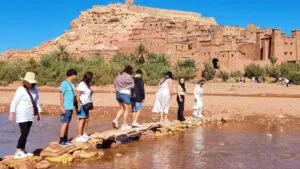
This Morocco travel guide brings together everything you need before your trip, in one place: the best time to go, how many days you need, the places not to miss, how to get there and move around, money and visas, food, culture, safety and practical tips. It is written by a local team that organizes private tours across Morocco every week, and each section links to a detailed guide if you want to go deeper.
Quick answer: visit Morocco in spring or autumn, plan 7 to 10 days, fly into Marrakech or Casablanca, and include at least one night in the Sahara. Carry some cash in dirhams, dress modestly in rural areas and book a private driver for the desert and the mountains. Start with how to plan a trip to Morocco.
Morocco Essentials at a Glance
| Book | Details | Tip |
|---|---|---|
| Currency | Moroccan dirham (MAD) | Carry cash for small shops |
| Languages | Arabic, Amazigh; French widely spoken | English and Spanish in tourist areas |
| Time zone | GMT+1 most of the year | GMT during Ramadan |
| Electricity | 220 V, plug types C and E | Same plugs as most of Europe |
| Visa | Not required for many nationalities (90 days) | Check the official consulate website |
| Main airports | Marrakech, Casablanca, Fes, Tangier, Agadir | Fly in and out of different cities |
Visa rules can change: always check the official source for your nationality.
Planning Your Trip
When to go
Spring (March to May) and autumn (September to November) are ideal for cities, mountains and the desert. Summer is very hot inland; winter is sunny with cold desert nights. Read the best time to visit Morocco, Morocco in spring and Morocco in winter.
How many days
One week covers Marrakech, the Sahara and Fes; 10 days add the north or the coast; two weeks show almost the whole country. Read 7 days in Morocco and 2 weeks in Morocco.
Where to go
Marrakech, the Sahara, Fes, Chefchaouen, Ait Ben Haddou and Essaouira are the classics. Read our best places to visit in Morocco.
Budget
The cost depends on season, group size, hotels and the desert camp. Read Morocco trip cost and Morocco all-inclusive tours.
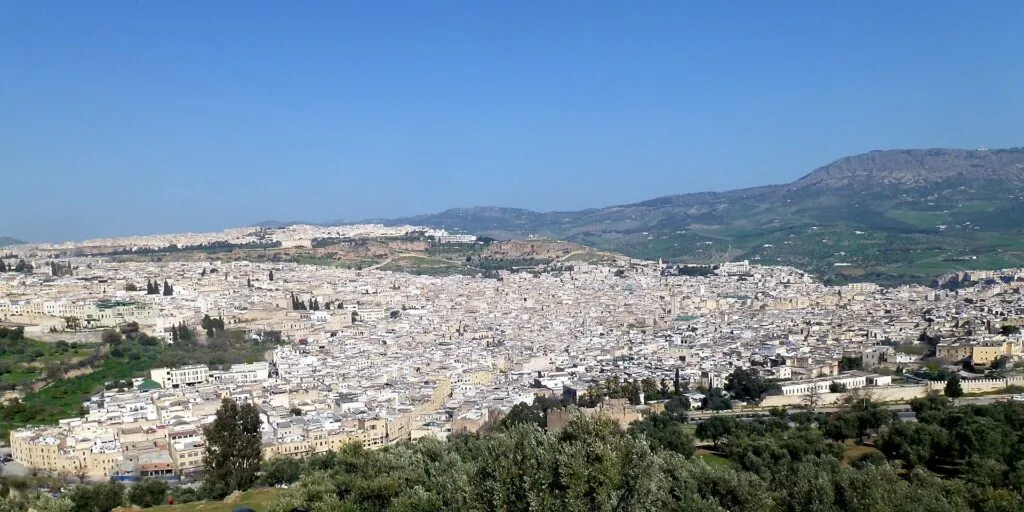
Getting There and Getting Around
By plane
Direct flights from Europe reach Marrakech, Casablanca, Fes, Tangier and Agadir. Landing in Casablanca? Read tours from Casablanca airport.
From Spain by ferry
Fast ferries cross from Tarifa to Tangier in about an hour. Read Morocco tours from Spain.
Trains
Fast and comfortable between Tangier, Rabat, Casablanca, Fes and Marrakech, but they do not reach the desert or the Atlas.
Private driver
The easiest way to combine cities, the kasbah road and the Sahara, stopping where you want. Compare a private tour vs group tour or book a private transfer.
Where to Stay: Riads, Hotels and Desert Camps
A riad is a traditional house built around a courtyard, often turned into a small guesthouse inside the medina. Staying in a riad is one of the best experiences in Marrakech and Fes. In the mountains you will find simple gîtes and lodges, and in the Sahara you sleep in a desert camp, from standard tents to luxury camps with private bathrooms. Read our Morocco desert tours guide.
Food and Drink
Moroccan food is one of the highlights of the trip: tagines, couscous on Fridays, harira soup, grilled meat and fish, fresh salads and mint tea everywhere. Try street food in busy, clean places, and drink bottled water. Alcohol is available in licensed hotels, bars and some restaurants, but it is not common in traditional places. Vegetarians are easy to cater for with vegetable tagines and salads.
Culture and Etiquette
- Dress modestly, especially in villages and religious places: covered shoulders and knees are respectful.
- Ask before photographing people, and accept a polite no.
- Non-Muslims cannot enter most mosques, except the Hassan II Mosque in Casablanca on guided visits.
- Bargaining is normal in the souks; stay friendly and agree on a price before buying.
- Use your right hand to eat and to give or receive things.
Safety and Health
Morocco is a safe destination for visitors, including families and solo travelers. The main annoyances are insistent sellers and unofficial guides in the medinas: a firm, polite “no, thank you” is enough, and licensed guides make visits easier. Drink bottled water, protect yourself from the sun and take travel insurance. Read is Morocco safe for tourists and solo travel in Morocco.
Money, Cards and Tipping
Bring some euros or dollars to exchange, or withdraw dirhams from ATMs in cities. Cards are accepted in many hotels and restaurants, but cash is needed in markets, small shops and rural areas. Tipping is customary for drivers, guides and camp staff, and around 10% is common in restaurants. Read our Morocco travel tips.
Phone and Internet
Wi-Fi is available in most riads and hotels, though it can be slow in remote areas and desert camps. A local SIM card or an eSIM with data is cheap and easy to buy at airports and phone shops, and it is very useful for maps and WhatsApp.
Ramadan and Holidays
During Ramadan, many Moroccans fast from sunrise to sunset. Travel is still easy: hotels and tourist restaurants stay open, but some local places close during the day and the evenings become festive. Be discreet when eating in public. Read Ramadan in Morocco.
What to Pack
Pack layers for hot days and cool nights, comfortable shoes for the medinas, a scarf, sun protection and a warm jacket for the desert or the mountains from October to April. Read what to pack for the Morocco desert.
Trips for Every Type of Traveler
- Families: read Morocco with kids.
- Couples: see our Morocco honeymoon tour.
- Seniors: read Morocco tours for seniors.
- Groups of friends: read Morocco trip with friends.
- Hikers: read how to climb Toubkal and see our treks in Morocco.
- Short stays: read 3 days in Marrakech and see our day trips.
City Guides
Explore each city in detail: things to do in Marrakech, things to do in Fes, things to do in Chefchaouen and day trips from Fes.
A Sample 10-Day Route Through Morocco
- Days 1–2: Marrakech. The medina, the souks, the Bahia Palace and Jemaa el-Fnaa at sunset.
- Day 3: Over the High Atlas. The Tizi n’Tichka pass, Ait Ben Haddou and Ouarzazate, night in the Dades Valley.
- Day 4: To the Sahara. The Todra Gorge, then a camel ride into the Erg Chebbi dunes and a night in a desert camp.
- Day 5: Through the Middle Atlas. Sunrise over the dunes, the Ziz Valley, Midelt and Ifrane, arrival in Fes.
- Day 6: Fes. A guided day in Fes el-Bali, the tanneries and the madrasas.
- Day 7: Meknes and Volubilis. The imperial city and the Roman ruins, then Chefchaouen.
- Day 8: Chefchaouen. The blue lanes and the Spanish Mosque viewpoint.
- Days 9–10: Rabat and Casablanca. The capital, the Hassan II Mosque and departure.
This route travels one way and avoids backtracking. We can adapt it to your dates and pace with our tailor-made tours.
Shopping and Souvenirs
The souks of Marrakech and Fes are full of beautiful crafts: handmade carpets, leather bags and slippers, ceramics, lanterns, argan oil, spices and textiles. Take your time, compare a few shops and agree on the price before buying. Women’s cooperatives are a good place to buy argan products directly from the people who make them. You are never obliged to buy in a shop visited during a tour, so feel free to look and say no politely.
Travelling with Reduced Mobility
Medinas have narrow lanes, steps and uneven surfaces, and many riads have stairs without lifts. With planning, a trip is still very enjoyable: choose hotels with ground-floor rooms or lifts, short walking visits with a guide and a 4×4 instead of the camel in the desert. A private driver makes all of this much easier. Tell us your needs when you contact us, and we will adapt the route.
Useful Words in Arabic and French
A few words make a big difference with locals. Salam alaikum means hello, shukran means thank you, la, shukran means no, thank you, and bslama means goodbye. In French, bonjour, merci and combien? (how much?) are understood almost everywhere. Moroccans appreciate the effort, and a smile with a greeting often opens the door to a friendly conversation, a cup of mint tea and a better price in the souks.
Morocco Travel Guide FAQ
Is Morocco good for a first trip to Africa?
Yes, it is close to Europe, safe, well organized for visitors and very varied.
What is the best month to visit Morocco?
April, May, October and November usually have the best weather.
How many days do I need in Morocco?
Seven to ten days for a first trip, including one night in the Sahara.
Do I need a visa for Morocco?
Many nationalities do not need a visa for up to 90 days; check the official consulate website.
What currency should I bring?
Euros or dollars to exchange, or withdraw dirhams from ATMs.
Can I drink tap water?
It is safer to drink bottled water.
What should women wear in Morocco?
Light, loose clothes covering shoulders and knees, plus a scarf.
Is it better to travel with a tour or alone?
Cities are easy alone; a private driver makes the desert and the mountains much easier.
Plan Your Trip with Local Experts
In short, this Morocco travel guide covers what you need to prepare a great trip. When you are ready, tell us your dates and interests, and we will design a private route with a clear quote.
Plan your trip: ask for a free quote, write to us on WhatsApp, or use our tailor-made form.