
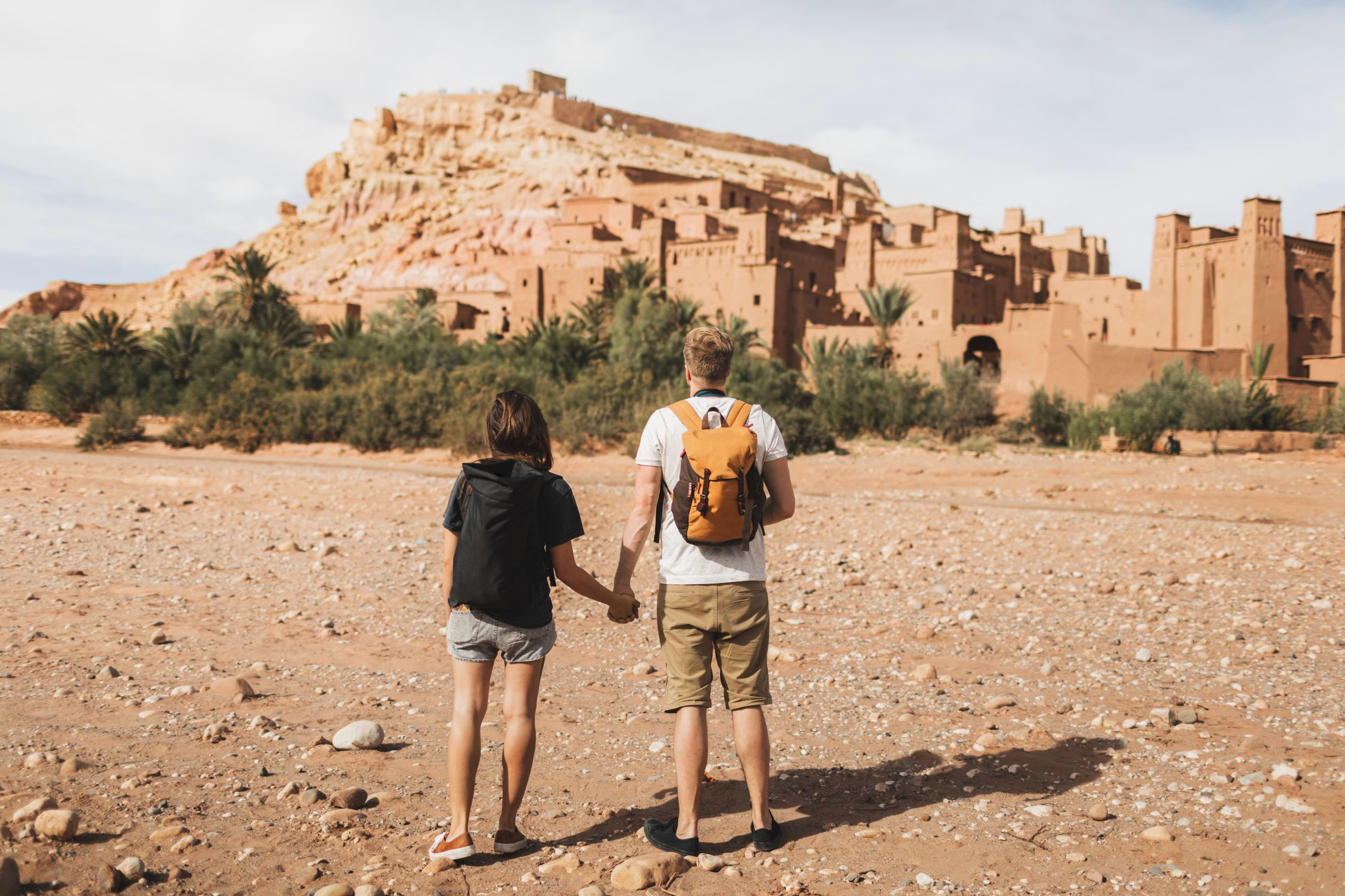
These Morocco travel tips cover what first-time visitors really need: money, dress, bargaining, transport and local customs. First, Morocco is easy to visit. Then, a few simple habits make the trip smoother. As a result, you spend less time worrying and more time enjoying the souks, the mountains and the Sahara.
Quick answer: bring some cash in dirhams, dress modestly, bargain with a smile, book licensed guides, and use a private driver for long distances. Also, plan your route by season.
Morocco Travel Tips Before You Go
Entry and Passport
Citizens of the EU, the UK, the US, Canada and Australia usually enter without a visa for up to 90 days. However, rules can change, so check with your government before you book. Also, make sure your passport is valid for your whole stay.
See our selection: Custom Morocco tours
When to Go
Spring and autumn are the most comfortable seasons. Summer is very hot in the desert, and winter nights are cold. For a full view, read our guide to the best time to visit Morocco. Moreover, if you travel in February or early March 2027, read about Ramadan in Morocco 2027.
How Many Days
With 3 or 4 days, you can see the Sahara and one city. With 7 to 10 days, you see the desert, the imperial cities and the north. Compare routes in our Morocco itineraries guide.
Money in Morocco
The currency is the Moroccan dirham (MAD). It is hard to get outside Morocco, so exchange money or use an ATM when you arrive. Cards work in most hotels and many restaurants. However, small shops, taxis and markets usually want cash. Therefore, carry small notes for tips and snacks.
What to Wear
Morocco is a Muslim country, so modest clothing is respectful. Cover your shoulders and knees, especially in medinas, villages and religious places. In addition, pack layers, because mornings and nights can be cool, even in spring. For the desert, see our Morocco desert packing list.
Local Customs
- Greetings: “Salam alaykum” is a warm hello. French also works in most cities.
- Photos: ask before you photograph people. Some may ask for a small tip.
- Mosques: most are closed to non-Muslims. The Hassan II Mosque in Casablanca is a well-known exception, with guided visits.
- Right hand: use your right hand to eat and to pass food.
- Mint tea: accept it when offered. It is a sign of welcome.
Bargaining in the Souks
Bargaining is normal in markets. First, ask the price and smile. Then, offer a lower price and meet in the middle. Finally, buy only if you are happy, and walk away politely if not. Fixed-price shops and cooperatives are good if you prefer not to bargain.
Getting Around
Trains link Marrakech, Casablanca, Rabat, Fes and Tangier. The high-speed Al Boraq connects Tangier and Casablanca in about 2 hours 10 minutes; see ONCF for times. However, trains do not reach the Sahara or the Atlas valleys. As a result, many visitors book a private driver for the desert. Browse our private Morocco tours.
Food and Water
Try tagine, couscous on Fridays, harira soup and fresh orange juice. Meanwhile, drink bottled or filtered water, and go easy on raw salads in the first days.
Tipping
Tipping is common. Around 10 percent is usual in restaurants, and small tips help in cafés, hotels and for porters. For drivers and guides, tip according to the service and the length of your trip.
Safety
Morocco is generally safe, and petty theft is the main risk. Read our full guide: Is Morocco safe for tourists?
Languages: What Is Spoken in Morocco?
Morocco is a multilingual country. The everyday language is Darija, Moroccan Arabic, while Tamazight, the Amazigh (Berber) language, is spoken in the mountains and the south and is an official language alongside Arabic. French is widely used in business, signs and hotels, and Spanish is common in the north, especially around Tangier and Tetouan. In tourist areas, many people speak English. Learning a few words always brings a smile: “salam” (hello), “shukran” (thank you) and “la, shukran” (no, thank you), which is very useful in the souks.
Phone, Internet and Electricity
- SIM cards: local SIM cards from Maroc Telecom, Orange or inwi are cheap and easy to buy at the airport or in shops; bring your passport.
- Wi-Fi: most riads, hotels and cafes offer Wi-Fi, though it can be slow in the mountains and the desert.
- Electricity: Morocco uses 220 volts and European-style plugs (types C and E), so travelers from the UK and North America need an adapter.
- Offline maps: download maps before entering the medinas, where GPS can be imprecise.
Religion and Etiquette
Morocco is a Muslim country, and showing respect for local customs makes your trip smoother and more pleasant. Most mosques are closed to non-Muslims, with the notable exception of the Hassan II Mosque in Casablanca, which offers guided visits. You will hear the call to prayer five times a day, a beautiful part of the atmosphere. On Fridays, the day of the main weekly prayer, some shops close around midday. In addition, alcohol is available in licensed hotels, restaurants and some shops, but drinking in public is not appropriate.
Traveling During Ramadan
During the holy month of Ramadan, Muslims fast from sunrise to sunset. Traveling at this time is perfectly possible and even fascinating, especially at sunset, when families gather to break the fast and the streets come alive. However, some restaurants close during the day, opening hours change, and it is respectful not to eat, drink or smoke in public during the day. Tourist sites, hotels and our tours continue as usual. Ask us about the dates when you plan your trip.
A Simple First-Week Route
For a first trip, we often recommend this one-week route, which shows the diversity of Morocco without rushing: two days in Marrakech, three days crossing the High Atlas and the kasbah road to the Erg Chebbi dunes, and two days in Fes. It follows our 5-day desert tour from Marrakech to Fes, with extra time in the cities. For longer trips, read our guides to 7 days in Morocco, the 14 day Morocco itinerary and how to plan a trip to Morocco.
Photography Etiquette
Morocco is incredibly photogenic, but many people, especially women and elderly people in the countryside, prefer not to be photographed. Always ask first, accept a “no” with a smile, and do not photograph people praying or inside private homes without permission. Street performers and some vendors expect a small tip for photos. Landscapes, medina architecture and markets can be photographed freely.
Our Top 5 Tips for First-Timers
- Do not try to see everything: Morocco is bigger than it looks, so focus on a few regions.
- Spend at least one night in the desert: it is the highlight of most trips.
- Book a guide for your first medina: it makes Marrakech or Fes much easier.
- Stay in riads: they offer the real Moroccan atmosphere.
- Travel with a private driver: trains do not reach the desert or the mountains.
Why Plan Your First Trip with Us
Since 2004, our agency, founded by guide Mohamed Azeroual and licensed by the Moroccan National Tourism Office, has helped many first-time visitors discover Morocco. We answer all your questions before you travel, design a route adapted to your time and interests, and stay in touch with you during the whole trip. Our travelers rate us 5.0 on Google, Viator and Trustpilot. Read also Is Morocco safe for tourists?, and start planning with our tailor-made tour form. For official information, visit the Visit Morocco website.
Private tour with a local driver, tailor-made route and a free quote within a few hours.
Morocco Travel Tips FAQ
Do I need cash in Morocco?
Yes. Cards work in hotels and many restaurants, but taxis, markets and small shops prefer cash in dirhams.
What should I wear in Morocco?
Wear modest clothes that cover your shoulders and knees, and bring layers for cool mornings and nights.
Is bargaining expected in Morocco?
Yes, in souks and markets. Be friendly, offer a fair price, and walk away politely if you do not agree.
What language is spoken in Morocco?
Moroccan Arabic and Amazigh are spoken everywhere. French is common, and Spanish is heard in the north. English works in most tourist places.
How many days do I need in Morocco?
With 7 to 10 days, you can see the Sahara, the imperial cities and the north without rushing.
Is a private driver worth it in Morocco?
Yes, especially for the Sahara and the mountains, where trains do not go. Therefore, a driver saves time and stress.
New to Morocco? Read how to plan a trip to Morocco, solo travel in Morocco and private tour vs group tour.
What languages are spoken in Morocco?
Darija (Moroccan Arabic) and Tamazight are the main languages. French is widely used, Spanish is common in the north, and many people in tourist areas speak English.
Can I travel to Morocco during Ramadan?
Yes. Tourist sites, hotels and tours continue as usual, but some restaurants close during the day, and it is respectful not to eat or drink in public before sunset.
Plan Your First Trip to Morocco
Ready for your first trip? Tell us your dates and interests, and we’ll build a private route. Contact us, or design it yourself with our Morocco custom tours.

Planning your Morocco trip?
Tell us your dates and number of travelers and we will send you a private route with a price within a few hours.