Planning what to see? These are the best things to do in Chefchaouen, the blue city of the Rif Mountains. Its painted lanes, calm squares and mountain views make it one of the most photographed places in Morocco. Here are 10 experiences and the best ways to get there.
Quick answer: walk the blue medina early in the morning, visit the kasbah and Outa el-Hammam, see Ras el-Maa and climb to the Spanish Mosque for sunset. Stay one night, or visit on a day trip: read our Chefchaouen day trip guide.
Chefchaouen at a Glance
| Book | Details | Tip |
|---|---|---|
| From Fes | About 3.5 to 4 hours | Day trip or one night |
| From Tangier | About 2 hours | Easy first stop from Spain |
| From Marrakech | About 8 to 9 hours | Best on a multi-day tour |
| Best time | Early morning | Quiet lanes for photos |
One night lets you enjoy the town without the day crowds.
See our selection: Tours From Fes
Things to Do
1. The blue medina
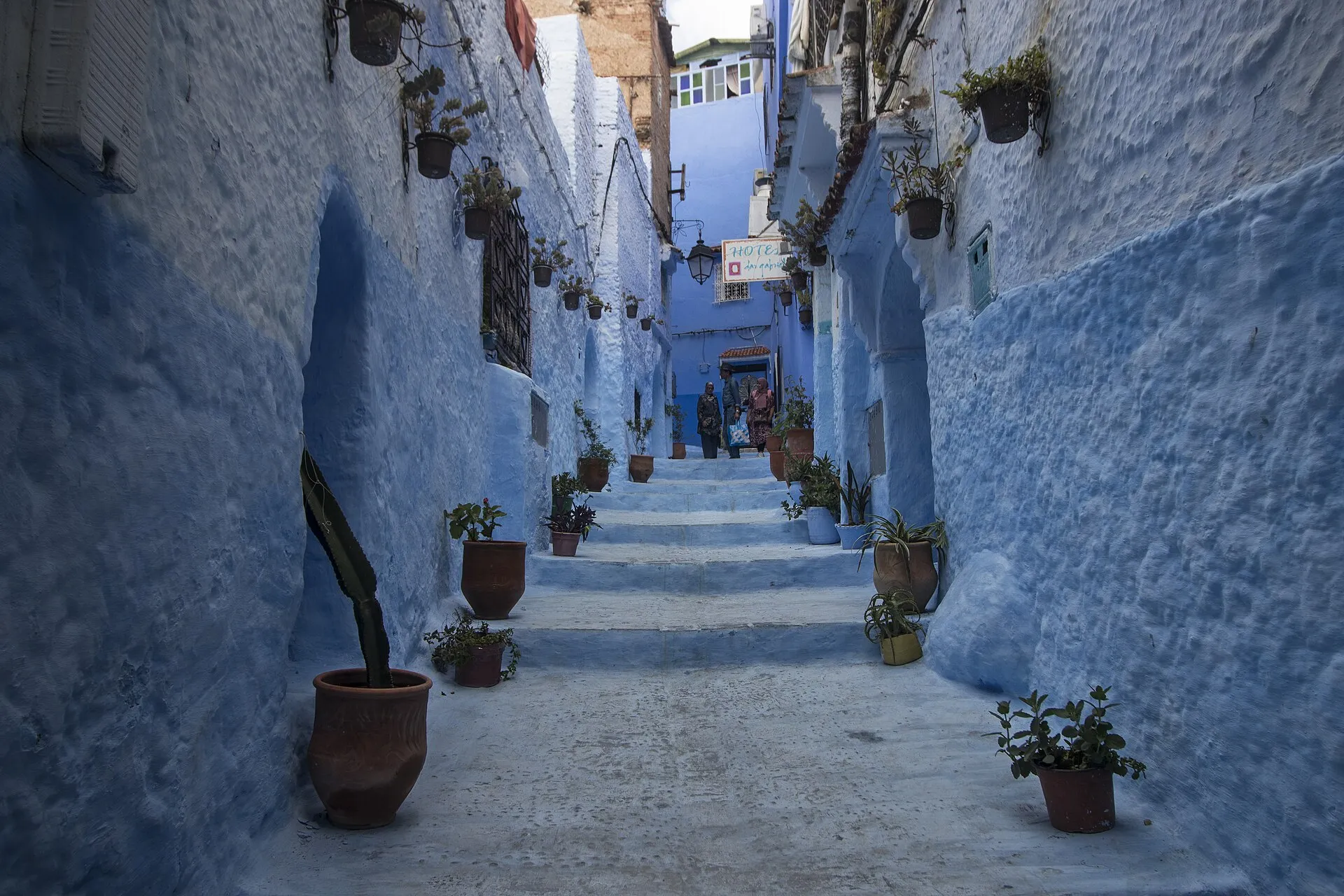
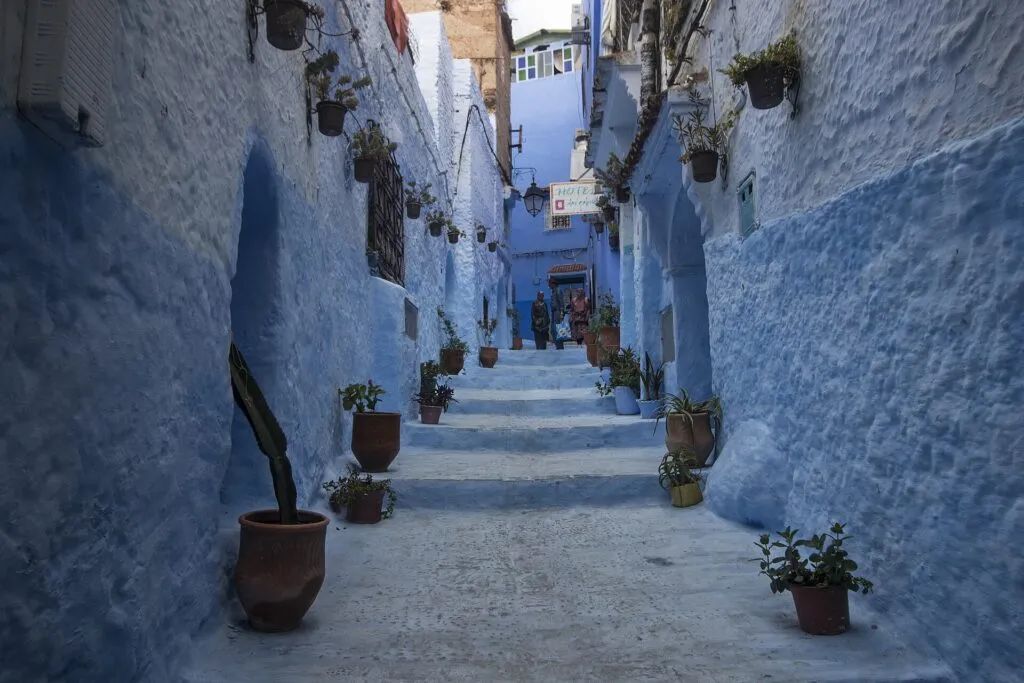
Founded in 1471 at the foot of the Rif mountains, Chefchaouen is famous for its medina painted in every shade of blue, from pale sky to deep indigo. Wander without a map through stepped lanes, past blue doors, potted plants and small workshops. The best streets for photos are around the upper medina, near Ras el-Maa.
2. Outa el-Hammam
Outa el-Hammam is the cobbled main square, shaded by trees and surrounded by cafés and restaurants. On one side stands the Grand Mosque with its unusual octagonal minaret; on the other, the kasbah. It is the natural meeting point of the town, lively from late afternoon.
3. The kasbah
The red-walled kasbah on the square dates from the founding of the town. Inside, a quiet Andalusian garden leads to a small ethnographic museum, and the tower offers a lovely view over the blue rooftops and the Grand Mosque.
4. Ras el-Maa
At the eastern edge of the medina, the Ras el-Maa spring supplies the town with fresh mountain water. Local women still wash clothes and wool in the stone channels, and small cafés by the stream are pleasant for a break.
5. Spanish Mosque viewpoint
From Ras el-Maa, a path climbs for about 30 minutes to the Spanish Mosque, built in the 1920s on a hill east of town. From here, the whole blue medina spreads out below the mountains, and the view at sunset is the highlight of many trips.
6. Shopping
The souks of Chefchaouen are relaxed and good value. Look for handwoven wool blankets, striped Rif fabrics, leather goods and natural pigments. Shopkeepers are usually less insistent than in bigger cities.
7. Akchour
About an hour from town, Akchour in the Talassemtane National Park is a beautiful area for hiking. Trails follow a river to turquoise pools, waterfalls and the God’s Bridge, a natural rock arch. Wear proper shoes and allow a full day.
8. Photography
For photographers, early morning is magical: the lanes are empty and the light is soft. Late afternoon light is warm too. Above all, ask before photographing people, and respect residents’ doors and homes.
9. Local food
The Rif kitchen is simple and tasty. Try fresh goat cheese from the mountains, bissara (a fava bean soup with olive oil and cumin), and tagines with local olives.
10. Relax on a terrace
Chefchaouen invites you to slow down. Sit on a rooftop terrace with a mint tea and watch the light change over the mountains. It is the perfect contrast to the energy of Fes or Marrakech.
How Long to Spend in Chefchaouen
A day trip is possible from Fes or Tangier, as explained in our guide to the Chefchaouen day trip. However, one night is ideal, because the town is quiet in the evening and early morning.
Getting to Chefchaouen
- Arrive the day before to enjoy the empty lanes at sunrise.
- Wear comfortable shoes: the medina has many stairs.
- Ask before photographing people.
- Bring a warm layer: evenings in the mountains are cool, even in summer.
How to Get There
From Tangier
About 2 hours. Read 5 day tour from Tangier and tours from Tangier.
From Fes
About 3.5 to 4 hours. Read Tangier to Fes.
From Marrakech
A long day; better on a tour. Read Marrakech to Chefchaouen.
Tips
- Arrive the day before to enjoy the empty lanes at sunrise.
- Wear comfortable shoes: the medina has many stairs.
- Ask before photographing people.
Why Is Chefchaouen Blue?
Everyone asks this question, and there is no single answer. Some say the blue was introduced by Jewish families who settled in the town in the 15th and 16th centuries, for whom blue symbolized the sky and the divine. Others say it keeps the houses cool in summer or keeps mosquitoes away. Today, residents repaint their walls regularly, partly out of tradition and partly because the blue has made the town famous around the world. Whatever the origin, walking through these lanes feels like stepping into a painting.
The Best Photo Spots in Chefchaouen
- The upper medina: the quiet lanes near Bab Onsar are the bluest and least crowded, especially early in the morning.
- Stairways with flower pots: scattered throughout the old town, they are the most photographed corners.
- Outa el Hammam square: the octagonal minaret and the red walls of the Kasbah make a beautiful contrast.
- Ras el Ma: the spring and the small bridges at the edge of the medina.
- The Spanish Mosque: the classic panorama of the whole town, best at sunset.
Always ask before photographing people, and avoid blocking doorways and private stairs.
Hiking Around Chefchaouen
Chefchaouen sits at the foot of the Rif Mountains, and the surrounding nature is as beautiful as the town itself. For a short walk, follow the path above Ras el Ma to the Spanish Mosque. For more ambitious hikers, the trails toward the mountains above the town offer wide views over the valley, and with a local guide you can climb higher peaks of the Rif. In addition, the Akchour waterfalls and God’s Bridge, about 45 minutes away, make a wonderful half-day excursion in the Talassemtane National Park. Read our Chefchaouen day trip guide for a detailed hour-by-hour plan.
What to Eat and Buy in Chefchaouen
The Rif has its own food traditions. Try the fresh goat cheese, often served with olive oil and bread, bissara (a thick fava bean soup), and tagines with local herbs. For souvenirs, Chefchaouen is known for its woven wool blankets and djellabas, leather goods, and natural products such as olive oil and honey. Prices are often more relaxed than in Marrakech or Fes, but friendly bargaining is still part of the experience.
Where to Stay in Chefchaouen
To enjoy the town at its best, stay at least one night. Inside the medina, small guesthouses and riads offer rooftop terraces with views over the blue houses and the mountains. In the evening, after the day visitors leave, the lanes become calm and the lights of the medina make it even more charming. Early in the morning, you have the streets almost to yourself.
Chefchaouen on Our Private Tours
Chefchaouen is included in many of our routes in the north. For example, the 6-day desert tour from Tangier to Marrakech via Fes spends a night in the blue town, and the 8-day essential Morocco tour from Marrakech to Tangier ends there before Tangier. Coming from Spain? See our Morocco tours from Spain and the guide to things to do in Tangier.
Why Visit Chefchaouen with Us
Since 2004, our agency, founded by guide Mohamed Azeroual and licensed by the Moroccan National Tourism Office, has organized private tours across Morocco, including the Rif Mountains. We plan your arrival at the best time, choose charming guesthouses in the medina and arrange local guides for hikes. Our travelers rate us 5.0 on Google, Viator and Trustpilot. To build your own route, use our tailor-made tour form, and see the official Visit Morocco website.
Private tour with a local driver, tailor-made route and a free quote within a few hours.
Things to Do in Chefchaouen FAQ
Why is Chefchaouen blue?
Several explanations exist, from religious symbolism to keeping insects away; today it is also part of its identity.
How many days do I need?
One night is ideal; a day trip is possible from Fes or Tangier.
Is Chefchaouen worth visiting?
Yes, for its atmosphere, photos and mountain setting.
How far is Chefchaouen from Fes?
About 3.5 to 4 hours by road.
Can I hike near Chefchaouen?
Yes, Akchour waterfalls are a popular day hike.
Why is Chefchaouen painted blue?
There are several explanations, from the tradition of Jewish families who settled there centuries ago to keeping houses cool. Today, residents keep painting it blue by tradition.
What should I buy in Chefchaouen?
Woven wool blankets, djellabas, leather goods, local goat cheese, olive oil and honey.
Visit Chefchaouen
In short, Chefchaouen is a highlight of northern Morocco. Tell us your dates and we will include it in your private route.
Plan your trip: ask for a free quote, write to us on WhatsApp, or read our Chefchaouen day trip guide.