
Introduction: Why the Merzouga Desert Morocco Belongs on Your Bucket List
The Merzouga Desert Morocco is one of the most breathtaking natural wonders in North Africa. Tucked into the southeastern corner of the country near the Algerian border, this golden sea of sand is the gateway to the legendary Erg Chebbi dunes. For travelers dreaming of camel treks, starlit camps, and silent sunrises, Merzouga is the ultimate Sahara experience.
Unlike many desert regions that require grueling expeditions, Merzouga is remarkably accessible. You can reach it by road from Marrakech, Fes, or even Casablanca, making it a realistic addition to almost any Morocco itinerary. This guide covers everything you need: location, activities, best seasons, transport options, and practical tips.
In this complete 2026 guide, you will learn how to plan a Merzouga desert tour, where to sleep, what to pack, and how to choose between Erg Chebbi and other Moroccan deserts. Whether you are a first-time visitor or a seasoned traveler, this article will help you build an unforgettable Sahara adventure.
Where Is the Merzouga Desert Morocco Located?
The Merzouga Desert Morocco sits in the Drâa-Tafilalet region, roughly 650 km east of Marrakech and about 450 km south of Fes. The nearest towns are Rissani (30 minutes away) and Errachidia (about 2 hours away). Its exact coordinates place it just a few dozen kilometers from the Algerian frontier, deep in the pre-Sahara zone.
What makes this location special is the presence of Erg Chebbi, a compact erg covering roughly 100 square kilometers. The dunes stretch about 20 km long and 5 km wide, and they rise as high as 150 meters. These are the tallest sand dunes in Morocco, and they create the postcard image most people associate with the Sahara.
Compared to the vast Sahara, which spans 9 million square kilometers, Erg Chebbi is tiny. Yet its size is precisely what makes it magical: you can walk to the top of a dune in under an hour and feel completely surrounded by desert. The local Berber Aït Atta people have lived here for generations, and many now welcome travelers into their camps.
Why Visit the Merzouga Desert Morocco? Four Unforgettable Reasons
There are dozens of deserts in the world, but few combine accessibility, beauty, and cultural richness like Merzouga. This section explains why the Merzouga Desert Morocco deserves a place on your travel list, starting with its landscapes and moving through culture, stargazing, and activities.
First, the landscapes are simply extraordinary. The Erg Chebbi dunes shift color throughout the day, from pale gold at dawn to deep orange at sunset. Photographers often describe the light here as “liquid amber,” and the contrast between sand and sky is unlike anything else in Morocco.
Second, the cultural immersion is genuine. You will share mint tea with nomads, hear Gnawa music around a campfire, and learn how Berber families have survived in this harsh environment for centuries. This is not a theme park version of desert life; it is the real thing, offered with warmth and hospitality.
Third, the night sky is world-class. With zero light pollution, Merzouga offers views of the Milky Way that most city dwellers have never seen. Astronomy lovers often plan entire trips around a single night here. Bring a star map, and you will be rewarded.
Fourth, the range of activities suits every traveler. Adrenaline seekers can try quad biking, sandboarding, or 4×4 dune bashing. Romantics can book a private dinner on the sand. Families can enjoy shorter camel rides and cultural visits. Whatever your travel style, Merzouga has a version of the desert for you.
Merzouga tours:
2-Day Zagora Desert Tour from Marrakech
3-Day Desert Tour from Marrakech to Fes via Merzouga
How to Get to the Merzouga Desert Morocco: Routes from Marrakech and Fes
Getting to the Merzouga Desert Morocco is part of the adventure. Most travelers arrive either from Marrakech or Fes, and each route offers distinct scenery. This section breaks down the options so you can choose the one that fits your schedule and budget.
From Marrakech, the drive is about 560 km and takes 9 to 10 hours without stops. The classic route passes Aït Ben Haddou, Ouarzazate, the Valley of Roses, the Dades Valley, and the Todra Gorges. Most people split this into a 3-day tour, spending one night in Dades and one night in the desert. The scenery is dramatic and varied, making the long drive worthwhile.
From Fes, the distance is shorter at roughly 450 km, or about 7 hours. The route passes Ifrane (often called the “Switzerland of Morocco”), the cedar forest of Azrou with its Barbary macaques, Midelt, and the Ziz Valley oasis. A 2-day tour from Fes is common, though 3 days allows a more relaxed pace.
Transport options include private tours with a driver-guide, self-drive car rental, public buses plus local transfers, and organized group excursions. For comfort, safety, and flexibility, a private Merzouga desert tour is the best choice. You avoid navigation stress, gain local insight, and can stop wherever you like for photos.
Whichever route you choose, plan to arrive in Merzouga by late afternoon. This timing lets you drop your bags, meet your camel guide, and ride into the dunes for sunset. Arriving at night means missing the most photogenic hours of the day.
Best Time to Visit the Merzouga Desert Morocco: A Season-by-Season Guide
The Merzouga Desert Morocco has a hot desert climate with sharp temperature swings. Choosing the right season dramatically affects your comfort and experience. This section walks through each season with practical advice.
Spring, from March to May, is widely considered the best time to visit Merzouga. Daytime temperatures range from 22°C to 30°C, nights are cool but not freezing, and the occasional wildflowers add color to the landscape. Sandstorms are rare, and the dunes are at their most photogenic.
Autumn, from September to November, is equally excellent. The summer heat has faded, the light is soft and golden, and the evenings are pleasant for camping. October is especially popular, so book your Merzouga desert camp early if you plan to travel then.
Winter, from December to February, brings mild days around 18°C but cold nights that can drop near freezing. If you visit in winter, pack layers, a warm hat, and a good sleeping bag. The upside is fewer crowds and crystal-clear skies for stargazing.
Summer, from June to August, is very hot, with daytime temperatures often exceeding 40°C. Travel is still possible, but you should avoid midday activities and drink far more water than usual. Many tour operators shift schedules to early morning and late evening to beat the heat.
Top Things to Do in the Merzouga Desert Morocco
The Merzouga Desert Morocco is packed with experiences, and most travelers combine several into a single tour. This section covers the best activities, from camel trekking to cultural encounters, so you can build your ideal itinerary.
1. Camel Trekking Across the Erg Chebbi Dunes
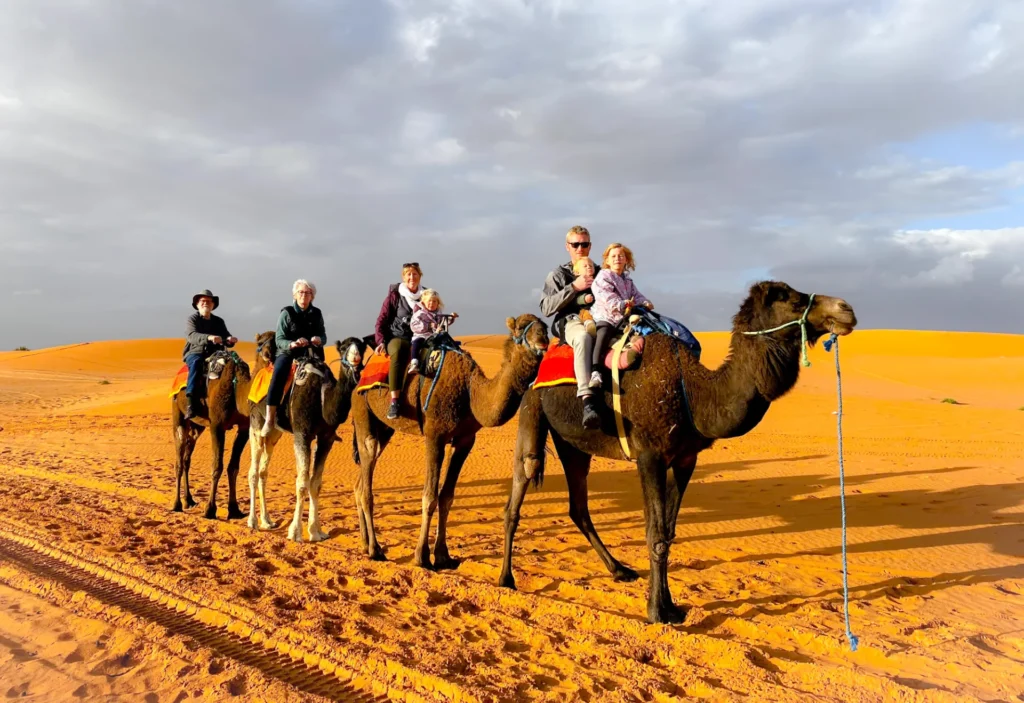
A camel trek is the signature Merzouga experience. You will ride a dromedary (one-humped camel) with a local guide, following ancient caravan routes into the dunes. The pace is slow, the silence is profound, and the views are unforgettable.
Most treks last one to two hours and end at a desert camp or a high dune for sunset. Longer treks of several days are available for adventurous travelers. Wear long pants, bring a scarf for sand protection, and listen to your guide’s instructions for mounting and dismounting.
2. Spending a Night in a Merzouga Desert Camp
Sleeping under the stars in a Merzouga desert camp is the highlight of most trips. Camps range from basic Berber tents to luxury glamping setups with private bathrooms, real beds, and gourmet dinners. The evening usually includes tagine, bread, mint tea, drum music, and dancing around a fire.
After dinner, guides often lead stargazing sessions, pointing out constellations and sharing Berber legends. Wake early for sunrise, which many travelers describe as more magical than sunset. The shifting light on the dunes is a photographer’s dream.
3. Watching Sunrise and Sunset Over the Dunes
Sunrise and sunset are the two most sacred moments in the Merzouga Desert Morocco. At sunset, the dunes turn deep orange and purple, casting long shadows that ripple across the sand. At sunrise, the desert wakes slowly, with cool air and soft pink light.
Bring a camera with a wide-angle lens, but also take time to simply sit and watch. Many travelers say the silence and scale of the dunes moved them more than any photo could capture. This is the moment Merzouga becomes unforgettable.
4. 4×4 Excursions, Quad Biking, and Buggy Tours
If you want adrenaline with your scenery, Merzouga delivers. 4×4 excursions take you deep into the erg and to nearby sites like the Paris-Dakar dunes, the fossil fields of Khettara, and nomad settlements. Quad biking and buggy tours offer a hands-on way to explore the sand.
These activities usually last one to two hours and include a guide, helmet, and safety briefing. They are suitable for beginners, though you should be comfortable with off-road terrain. Always choose a licensed operator and follow environmental guidelines to protect the dunes.
5. Sandboarding and Sand Kitesurfing
Sandboarding is a fun, low-cost activity that anyone can try. You strap a board to your feet and slide down a dune, much like snowboarding but on sand. Many camps provide boards for free or for a small fee.
Sand kitesurfing is a more advanced option. You use a kite to glide across the dunes and even jump. It is exhilarating but requires some instruction. If you are curious, ask your camp or tour operator about beginner lessons.
6. Cultural Experiences with Local Berber Families
The Merzouga Desert Morocco is home to Berber and nomadic communities who welcome visitors. Cultural experiences may include mint tea ceremonies, bread baking in sand ovens, henna tattoos, and traditional music performances.
These interactions are often the most memorable part of a trip. You learn how families navigate life without running water or electricity, and you gain a deeper respect for desert resilience. Tip fairly and ask before taking photos of people.
How Many Days Do You Need in the Merzouga Desert Morocco?
Most travelers wonder how long to spend in Merzouga. The honest answer depends on your pace, but one night is the absolute minimum. Two nights are ideal for a deeper experience.
With one night, you can arrive in the afternoon, take a camel trek, watch sunset, enjoy dinner and music, sleep in a camp, and see sunrise before leaving. It is rushed but rewarding. This works well for travelers on tight schedules.
With two nights, you can add a 4×4 excursion, visit a nomad family, explore Rissani’s market, or simply relax on a dune with a book. Two nights also reduce the risk of weather ruining your only sunset. For photographers and honeymooners, two nights are strongly recommended.
If you have three nights or more, you can combine Merzouga with nearby attractions like the Todra Gorges, Dades Valley, and Aït Ben Haddou. This turns a desert visit into a full southern Morocco loop.
Where to Stay in the Merzouga Desert Morocco
Accommodation in Merzouga falls into three categories: desert camps, guesthouses in the village, and luxury riads on the dune edge. Each offers a different experience.
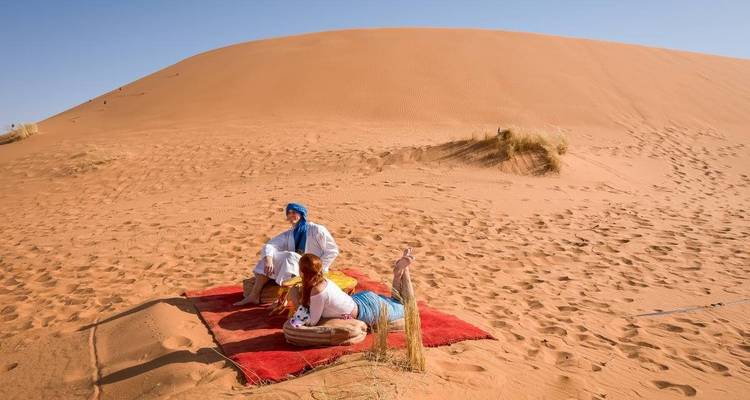
Desert camps are the most popular choice. Standard camps offer shared tents, basic bedding, and communal dinners. Luxury camps, often called “desert glamping,” provide private tents with real beds, en-suite bathrooms, hot showers, and multi-course meals. Prices range from €40 to €300 per person per night.
Guesthouses in Merzouga village are budget-friendly and convenient if you want a real bed and electricity. They are a good option for travelers who prefer not to sleep in the sand. Many guesthouses also arrange camel treks and 4×4 tours.
Luxury riads on the edge of the dunes combine comfort with views. You can watch the sunset from a terrace, then retreat to air-conditioned rooms. These are ideal for honeymooners and travelers who want a softer landing after the desert.
When booking, check recent reviews and confirm what is included. Some camps include camel treks and meals; others charge extra. Always ask about bathroom facilities if that matters to you.
What to See Around the Merzouga Desert Morocco
Merzouga is not an isolated attraction. Several worthwhile sites lie within a short drive, and combining them enriches your trip. This section highlights the best nearby destinations.
Rissani is a market town about 30 minutes away. Its souk is one of the most authentic in southern Morocco, selling spices, dates, and traditional crafts. It is also the ancestral home of the Alaouite dynasty, which still rules Morocco today.
The Todra Gorges are about 2.5 hours away, but many tours include them en route. The canyon walls rise 300 meters, and the river below supports palm groves and Berber villages. It is a favorite spot for climbers and photographers.
The Dades Valley, often called the “Valley of a Thousand Kasbahs,” is another highlight. Its rock formations, including the famous “monkey fingers,” are surreal. Most Marrakech-to-Merzouga tours stop here for a night.
Aït Ben Haddou, a UNESCO World Heritage site, is a fortified village that has appeared in dozens of films. It is usually visited on the first day of a 3-day tour from Marrakech. Walking through its ksar feels like stepping into history.
Merzouga Desert Morocco vs. Other Moroccan Deserts
Morocco has several desert regions, and choosing between them can be confusing. This section compares Merzouga with Agafay, Zagora, and Erg Chigaga.
Agafay is a rocky desert about 45 minutes from Marrakech. It is convenient for day trips but lacks tall sand dunes. If you only have one day and want a quick desert taste, Agafay works. For the classic Sahara experience, Merzouga is far superior.
Zagora is closer to Marrakech (about 7 hours) but has smaller dunes. It is a good option for travelers with limited time who still want sand. However, most guides agree that Erg Chebbi’s dunes are more impressive.
Erg Chigaga is wilder and more remote than Merzouga, near M’Hamid. It requires a long 4×4 journey and offers a true off-grid experience. It is ideal for adventurous travelers, but Merzouga remains the better choice for first-timers.
In short, Merzouga offers the best combination of accessibility, dune size, and infrastructure. That is why it is the most visited desert in Morocco.
Practical Tips for Visiting the Merzouga Desert Morocco
A little preparation goes a long way in the desert. These practical tips will help you stay comfortable, safe, and respectful during your visit.
Pack light, loose clothing for daytime and warm layers for night. A scarf or buff protects your face from sand, and sunglasses are essential. Bring a headlamp, sunscreen, lip balm, and a reusable water bottle. Sturdy sandals or closed shoes work best for walking on dunes.
Stay hydrated and avoid alcohol before camel treks. The dry air dehydrates you faster than you realize. Drink water regularly, even if you do not feel thirsty. Eat light meals before activities to avoid discomfort.
Respect local customs. Dress modestly in villages, ask before photographing people, and do not waste water. Tipping guides, drivers, and camp staff is customary and appreciated. A small tip of 20–50 MAD per service is standard.
Choose licensed tour operators who follow environmental rules. Avoid activities that damage dunes, such as driving off marked tracks. Support camps that employ local staff and source food locally. Responsible travel keeps Merzouga beautiful for future visitors.
Frequently Asked Questions About the Merzouga Desert Morocco
Is the Merzouga Desert Morocco worth visiting?
Yes. It offers the tallest dunes in Morocco, authentic Berber culture, and unforgettable sunrises. It is one of the top experiences in the country.
What is the best time to visit Merzouga?
Spring (March–May) and autumn (September–November) offer the best weather. Summer is very hot, and winter nights are cold.
How far is Merzouga from Marrakech?
About 560 km, or 9–10 hours by road. Most travelers break the journey into a 3-day tour.
How far is Merzouga from Fes?
About 450 km, or 7 hours. A 2-day tour is common, though 3 days is more relaxed.
Do I need a guide in Merzouga?
For camel treks and 4×4 excursions, yes. Local guides know the dunes and ensure safety. For village visits, a guide adds cultural context.
Is Merzouga safe?
Yes, it is very safe for tourists. The main risks are heat, dehydration, and occasional sandstorms. Follow your guide’s advice.
Can I visit Merzouga without a tour?
Yes, you can drive yourself and book activities locally. However, a private tour is easier and often better value.
What should I pack for Merzouga?
Light clothing, warm layers, scarf, sunglasses, sunscreen, headlamp, water bottle, and comfortable shoes.
Are there ATMs in Merzouga?
There are a few ATMs in Merzouga village, but they can run out of cash. Bring enough dirhams from Marrakech or Fes.
Is there Wi-Fi in the desert?
Some luxury camps offer Wi-Fi, but it is slow. Most travelers enjoy the digital detox.
Conclusion: Plan Your Merzouga Desert Morocco Adventure Today
The Merzouga Desert Morocco is more than a destination; it is a feeling. The silence of the dunes, the warmth of Berber hospitality, and the vastness of the starry sky stay with travelers long after they leave. Whether you come for one night or three, Merzouga will change how you see the world.
To make the most of your trip, choose the right season, book a reputable tour operator, and allow at least two nights if possible. Combine Merzouga with Marrakech, Fes, or Casablanca for a full Moroccan adventure. And do not forget to pause, sit on a dune, and simply listen.
Ready to experience the Sahara? Contact a licensed Morocco tour operator today to design your private Merzouga desert tour. Your camel is waiting, the stars are aligned, and the dunes are calling.