
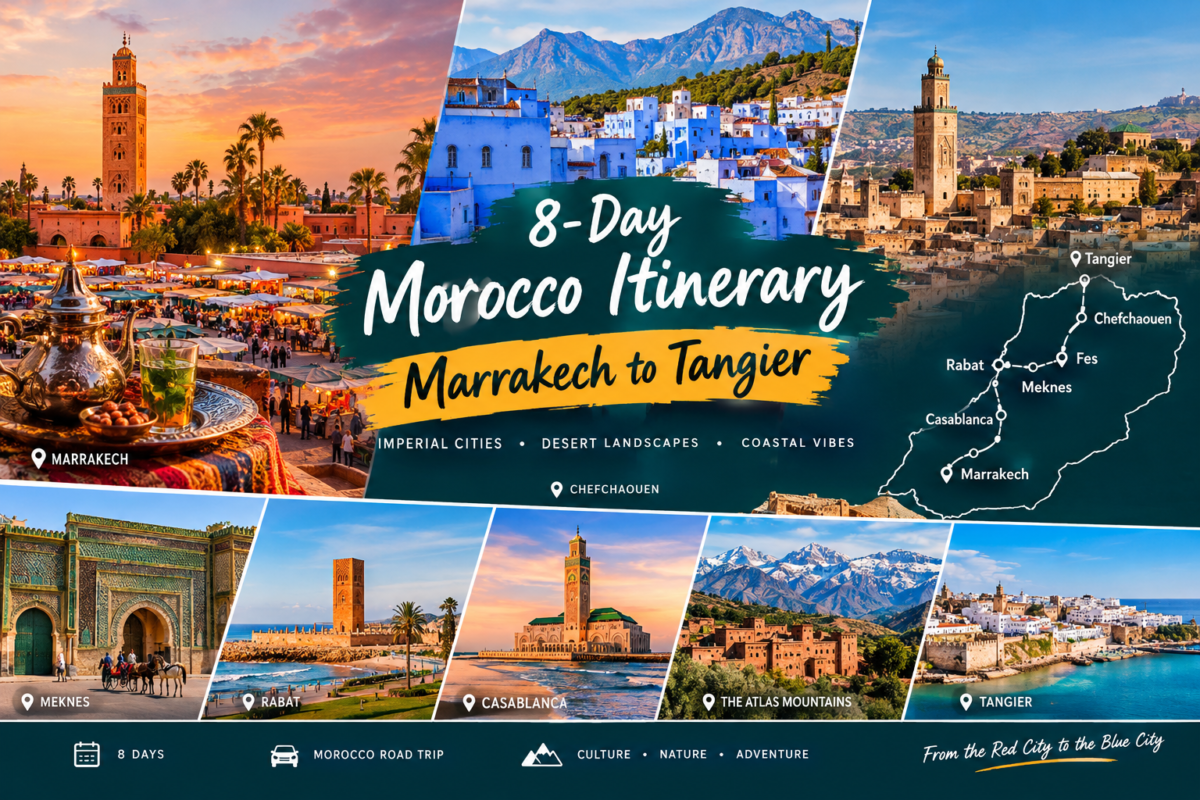
8-Day Morocco Itinerary: Marrakech to Tangier via the Sahara & Imperial Cities
This 8-day Morocco itinerary travels one way from Marrakech to Tangier, crossing the High Atlas Mountains, the kasbahs and oases of southern Morocco, the Erg Chebbi dunes near Merzouga, the medieval medina of Fes, the Roman ruins of Volubilis, and the blue streets of Chefchaouen. It is an ambitious route, but it works well for travelers who want to see several of Morocco’s major landscapes and historic regions without returning to their starting point.
The complete journey covers roughly 1,250 to 1,350 kilometers once local excursions and desert drives are included. Expect approximately 22 to 25 hours of driving across the eight days, with Day 5 between Merzouga and Fes being considerably longer than the other travel days. Road conditions, traffic, weather, stops, and the exact location of your accommodation can all affect these estimates.
This guide provides a practical day-by-day route from Marrakech to Tangier, including approximate distances, realistic driving considerations, worthwhile stops, accommodation areas, seasonal advice, and planning tips.
8-Day Marrakech to Tangier Route at a Glance
A linear south-to-north itinerary minimizes unnecessary backtracking. The route crosses the High Atlas on the N9 before continuing through Ouarzazate, the Dades and Todra valleys, Merzouga, Fes, Meknes, Volubilis, Chefchaouen, and finally Tangier.
| Day | Route | Approx. Distance | Approx. Driving | Overnight |
|---|---|---|---|---|
| 1 | Marrakech – Tizi N’Tichka – Telouet – Ait Ben Haddou – Ouarzazate | 200 km | 4.5 hours | Ouarzazate |
| 2 | Ouarzazate – Skoura – Rose Valley – Dades Valley | 140 km | 2.5 hours | Boumalne Dades / Dades Valley |
| 3 | Dades Valley – Todra Gorge – Erfoud – Merzouga | 270 km | 4 hours | Erg Chebbi desert camp |
| 4 | Merzouga desert circuit | About 80 km | About 2 hours of driving | Merzouga |
| 5 | Merzouga – Ziz Valley – Midelt – Azrou – Ifrane – Fes | 460 km | 7.5 hours | Fes |
| 6 | Fes sightseeing | Local transfers | Mostly walking | Fes |
| 7 | Fes – Meknes – Volubilis – Chefchaouen | 260 km | 4.5 hours | Chefchaouen |
| 8 | Chefchaouen – Tangier | 115 km | 2 hours | Departure or Tangier |
Important: Driving figures are estimates for planning purposes rather than guaranteed transfer times. Photo stops, meals, construction, mountain weather, traffic, and seasonal road conditions can lengthen the day considerably.
Best Time for This Marrakech to Tangier Itinerary
Spring, particularly March through May, and autumn, from September through November, generally provide the most comfortable balance of temperatures for a route that includes both mountains and desert. Summer can be extremely hot around Merzouga, while winter brings cold nights in the Sahara and the possibility of difficult weather at higher elevations in the Atlas Mountains.
- Spring: Pleasant temperatures, greener valleys, and a good chance of seeing roses in the Kalaat M’gouna region during the flowering season.
- Summer: Possible, but desert temperatures can be intense. Sightseeing should be planned around the hottest part of the day.
- Autumn: Often one of the most comfortable periods for both desert and city sightseeing.
- Winter: Expect cold desert nights and much cooler conditions in the Atlas and Middle Atlas. Mountain weather should be checked before departure.
A private air-conditioned 4×4 or minivan with a driver is convenient for this itinerary because of the amount of ground covered and the off-road Merzouga circuit. Independent self-driving is also possible on the main roads, although it requires more attention to navigation, mountain driving, parking, and daily timing.
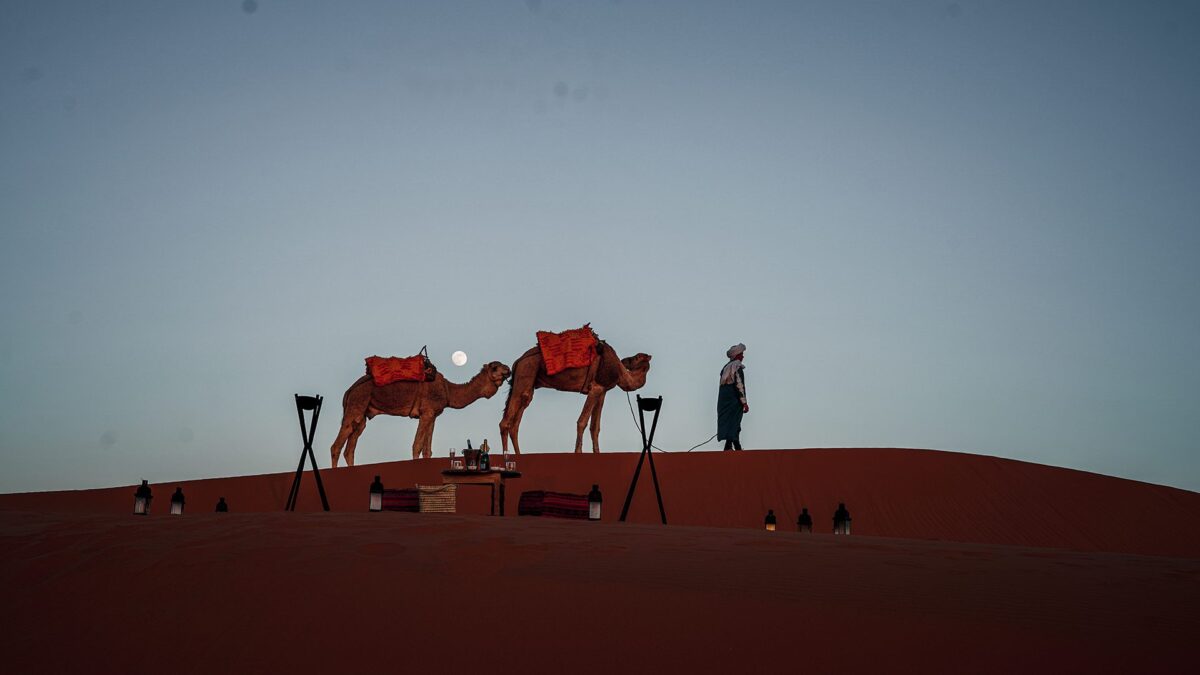
Day 1: Marrakech to Ouarzazate via Tizi N’Tichka, Telouet & Ait Ben Haddou
The journey begins by leaving the plains around Marrakech and climbing into the High Atlas Mountains. Today’s route follows the N9 across Tizi N’Tichka before detouring through the Ounila Valley to Telouet and Ait Ben Haddou. The final stop is Ouarzazate, commonly described as a gateway between the Atlas Mountains and Morocco’s desert regions.
- Approximate distance: 200 km
- Estimated driving: 4.5 hours, excluding sightseeing
- Highest point: Tizi N’Tichka Pass, approximately 2,260 meters
- Main route: N9 plus the Telouet/Ounila Valley detour
Morning: Cross the High Atlas Mountains
An early departure leaves more time for viewpoints and helps avoid turning the day into a rushed transfer. The road climbs through dramatically folded mountain terrain and scattered villages before reaching Tizi N’Tichka, one of the best-known road passes in the High Atlas.
The mountain section contains numerous bends. Travelers susceptible to motion sickness may want to prepare accordingly before leaving Marrakech. Temperatures at the pass can also be substantially cooler than in the city, so keeping a light jacket accessible is useful even when Marrakech feels warm.
After crossing the main pass, detour toward Telouet Kasbah. Once associated with the influential El Glaoui family, the complex contrasts weathered earthen fortifications with surviving interiors decorated with zellige, carved plaster, and cedar woodwork.
Afternoon: Ounila Valley & Ait Ben Haddou
Continue through the Ounila Valley to Ait Ben Haddou, an earthen fortified settlement and UNESCO World Heritage Site. The ksar is one of southern Morocco’s best-known examples of traditional pre-Saharan architecture and has also appeared in numerous film and television productions.
Allow approximately 1.5 to 2 hours to walk through the settlement and climb toward the upper part of the hill. Access arrangements can change, and privately maintained buildings within the ksar may charge their own small admission fees.
Travelers with less time in Morocco often visit the area on an Ouarzazate and Ait Ben Haddou Day Trip from Marrakech. On this longer itinerary, however, continuing onward to Ouarzazate makes the following day’s journey considerably easier.
Finish with the short drive to Ouarzazate, check into your hotel or riad, and spend the evening at leisure.
Day 2: Ouarzazate to Dades Valley via Skoura & the Rose Valley
Day 2 follows a gentler route through palm oases, historic kasbah country, and the cultivated valleys east of Ouarzazate. Because today’s driving distance is relatively short, there is enough time for several worthwhile stops.
- Approximate distance: 140 km
- Estimated driving: 2.5 hours
- Key areas: Ouarzazate, Skoura, Kalaat M’gouna and Dades Valley
- Main road: N10
Morning: Ouarzazate, Skoura & Kasbah Amridil
Before leaving Ouarzazate, you can see Taourirt Kasbah or, depending on your interests and available time, visit one of the area’s film studios. Ouarzazate has long served as a production base for movies and television projects filmed in southern Morocco.
Continue east toward the Skoura palm oasis, where date palms and cultivated plots surround traditional earthen buildings. One of the area’s principal historic attractions is Kasbah Amridil, a 17th-century fortified residence where visitors can learn about traditional architecture, grain storage, olive-oil production, and agricultural life in the oasis.
Afternoon: Rose Valley & Dades Gorge
Continue toward Kalaat M’gouna and the Valley of Roses, known for the cultivation of Damask roses used in rose water, fragrances, oils, and cosmetic products. Flowering and harvesting are seasonal, so the landscape will look different depending on when you visit.
From Boumalne Dades, leave the main highway and follow the Dades River farther into the valley. Eroded red-rock landscapes and formations known locally to visitors as the “Monkey Fingers” are among the most recognizable sights along the route.
Spend the night in the Dades Valley. A locally run guesthouse or cliffside hotel makes a convenient base and leaves you close to the gorge for the following morning.
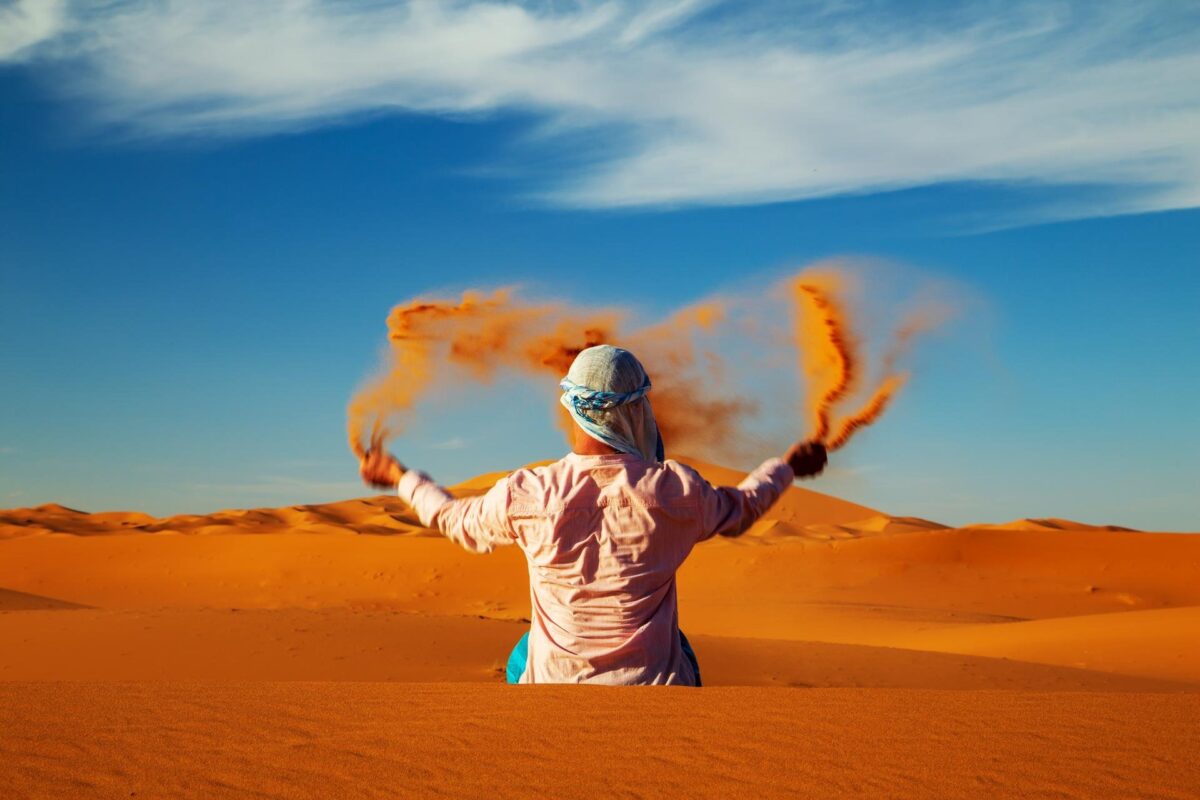
Day 3: Dades Valley to Merzouga & Erg Chebbi Desert Camp
On Day 3, the scenery changes from mountain valleys to increasingly arid plains before reaching the dunes of Erg Chebbi beside Merzouga. Todra Gorge is the main sightseeing stop before the journey continues toward the Sahara.
- Approximate distance: 270 km
- Estimated driving: 4 hours
- Main highlights: Todra Gorge, Erfoud, Erg Chebbi and a sunset desert experience
- Main roads: N10 and connecting roads toward Merzouga
Morning: Todra Gorge
Depart the Dades Valley and continue toward Tinghir, then follow the road into Todra Gorge. The canyon is famous for its steep limestone walls, which rise dramatically above the river and road.
Allow approximately 45 to 60 minutes for a short walk through the most accessible part of the gorge. Riverside cafes and stalls are found around the main visitor area. Conditions and crowds vary throughout the day, and the light changes significantly as the sun moves across the narrow canyon.
Afternoon: Erfoud to the Erg Chebbi Dunes
Continue through Tinjdad and Touroug toward Erfoud. The wider Erfoud region is well known for fossil-bearing stone, and workshops around town display polished pieces and decorative objects made from fossil-rich rock.
By late afternoon, arrive around Merzouga at the edge of Erg Chebbi. The dunes are the focal point of many Morocco Sahara routes, including the 3-Day Desert Tour from Marrakech to Fes via Merzouga and the slower-paced 4-Day Desert Tour from Marrakech to Fes via Merzouga.
Evening: Camel Trek & Desert Camp
Depending on the camp and tour arrangement, luggage is generally transferred separately while guests enter the dunes by camel or 4×4. Camel rides are commonly timed to take advantage of the late-afternoon light and sunset. Travelers who do not want to ride a camel can normally arrange a vehicle transfer instead.
Desert camps range from relatively simple tented accommodation to higher-comfort camps with private bathrooms, hot-water facilities, larger beds, and electricity. Amenities vary significantly, so confirm exactly what your chosen camp provides rather than relying solely on the terms “standard” or “luxury.”
After dinner, many camps organize local music around a communal fire when weather conditions permit. Clear nights can provide excellent views of the desert sky.
Day 4: Merzouga Desert Circuit, Khamlia & Oasis
Instead of leaving Erg Chebbi immediately after breakfast, dedicate Day 4 to the communities and landscapes surrounding Merzouga. A 4×4 is particularly useful for the gravel pistes, rocky hammada, and unpaved tracks outside the villages.
- Approximate circuit: 80 km, depending on the route used
- Estimated driving: Around 2 hours plus stops
- Terrain: Paved roads, gravel tracks and rocky desert
- Recommended vehicle: 4×4 for the full regional circuit
Morning: Sunrise, Desert Landscapes & Nomadic Communities
Rise before breakfast if you want to see sunrise over the dunes. After leaving camp, head across the hammada to explore the wider desert environment.
Some guided circuits include a visit with a semi-nomadic family. Such encounters are most worthwhile when arranged respectfully through local guides, with the hosts’ consent and appropriate compensation rather than treated simply as a photo stop. A good guide can provide context about pastoral life, livestock, water access, and the changing economic realities of the region.
The circuit may also pass M’Fis, an area associated with former mineral extraction. The surrounding high ground provides broad views across the rocky desert.
Afternoon: Khamlia, Gnaoua Music & Dayet Srji
Continue to Khamlia, a village known for musical traditions associated with Morocco’s Gnaoua heritage. Performances feature instruments such as the metal qraqeb and the three-stringed guembri, accompanied by layered rhythms and vocals. If a performance is offered without a fixed ticket price, a contribution to the musicians is appropriate.
For lunch, look for medfouna, a regional stuffed bread sometimes described to visitors as “Berber pizza.” Recipes vary, but the bread may contain seasoned meat and other fillings.
Later, explore the cultivated palm areas around Merzouga or visit Dayet Srji, a seasonal lake west of the dunes. Water levels vary dramatically, and birdlife is dependent on conditions; flamingos and other migratory birds may be present when the lake holds sufficient water.
Spend the second desert night in a hotel or riad near the dunes. This provides a comfortable transition before the longest road journey of the itinerary.
Day 5: Merzouga to Fes via Ziz Valley, Midelt, Azrou & Ifrane
Day 5 is the most demanding transfer. The route travels from the Saharan southeast through the Ziz Valley and Middle Atlas before finishing in the historic city of Fes. Start early and avoid planning major sightseeing for the evening.
- Approximate distance: 460 km
- Estimated driving: 7.5 hours before longer stops
- Key stops: Ziz Valley, Midelt, Azrou and Ifrane
- Main route: N13 and connecting roads to Fes
Morning: Rissani & the Ziz Valley
Leave Merzouga early, passing Rissani before following the Ziz corridor north. Date palms fill long sections of the valley floor beneath stark cliffs and arid plateaus. A panoramic viewpoint along the route provides an excellent overview of the oasis.
The same geographic corridor is used in reverse by itineraries such as the 3-Day Desert Tour from Fes to Marrakech and the 4-Day Desert Tour from Fes to Marrakech.
Continue toward Midelt, a highland town between the High and Middle Atlas regions, for lunch and a break from driving.
Afternoon: Azrou Cedar Forest & Ifrane
As you enter the Middle Atlas, the landscape becomes noticeably greener. Cedar forests around Azrou are habitat for Barbary macaques, the only macaque species native to Africa. They are wild animals, so observe them without feeding or approaching them.
- Keep several meters between yourself and the macaques.
- Do not feed them bread, sweets, processed food, or other human food.
- Secure food, sunglasses, phones, and loose personal belongings.
- Never encourage an animal to approach for a photograph.
Continue through Ifrane, known for its landscaped parks, sloping-roof architecture, and cold, snowy winters. From there, descend toward the Saïss Plain and arrive in Fes in the early evening.
Check into a riad in or near the medina. Staying within walking distance of Fes el-Bali is especially useful for the next day’s guided exploration.
Day 6: Full-Day Guided Tour of Fes
Day 6 is deliberately free of long-distance driving. Fes is one of Morocco’s historic imperial cities, and the UNESCO-listed Fes el-Bali medina contains a dense network of alleys, markets, religious buildings, workshops, and traditional homes. A knowledgeable licensed local guide can make the city’s complicated layout and history much easier to understand.
Wear comfortable footwear with good grip, as the medina includes uneven paving, steps, slopes, and narrow pedestrian lanes.
Morning: Royal Palace, Mellah & Panoramic Views
- Royal Palace Gates: View the ornate exterior gates of Dar al-Makhzen, decorated with brasswork, tile, and carved details. The royal palace itself is not generally open for public sightseeing.
- Fes Mellah: Explore the historic Jewish quarter and notice architectural features such as exterior-facing wooden balconies that distinguish some buildings from more inward-looking medina houses.
- Panoramic viewpoint: A drive to one of the elevated fortifications around Fes provides a useful overview of the old city’s scale and geography.
- Pottery and zellige workshop: See how ceramics and hand-cut zellige mosaics are produced by local craftspeople.
Afternoon: Walking Through Fes el-Bali
Enter the old medina and explore its major religious, educational, commercial, and craft landmarks. Your precise route will depend on opening conditions and the guide’s itinerary.
- Al-Qarawiyyin: The institution associated with the Qarawiyyin Mosque was founded in the ninth century by Fatima al-Fihri and has a long scholarly tradition. Access to active religious areas is restricted for non-Muslim visitors, although architectural views may be possible from entrances and surrounding lanes.
- Al Attarine Madrasa: This Marinid-era school is celebrated for elaborate zellige, carved plaster, woodwork, and a highly decorated courtyard.
- Chouara Tanneries: View Fes’s famous leather-working area from surrounding terraces, where hides are processed and dyed in large vats. The odor can be strong, particularly during warm weather, and nearby shops often offer mint to visitors.
- Place Seffarine and the souks: Continue through craft districts where metalworking, textiles, spices, leather goods, and other traditional trades remain visible.
Fes is also a practical starting point for longer regional journeys, including a 7-Day Desert & Imperial Cities Loop Tour from Fes.
Day 7: Fes to Chefchaouen via Meknes & Volubilis
Day 7 combines three very different destinations: the imperial architecture of Meknes, the archaeological remains at Volubilis, and the Rif Mountain setting of Chefchaouen.
- Approximate distance: 260 km
- Estimated driving: 4.5 hours
- Main stops: Meknes and Volubilis
- Final destination: Chefchaouen
Morning: Imperial Meknes
Drive west from Fes to Meknes, which Sultan Moulay Ismail developed extensively as an imperial capital in the late 17th and early 18th centuries. Its monumental gates and royal complexes reflect the scale of his building program.
Key sights include Bab Mansour and sites connected with the former royal complex. Access and restoration work can affect individual monuments, so your guide or driver should confirm what is open on the day of your visit.
Late Morning: Roman Volubilis
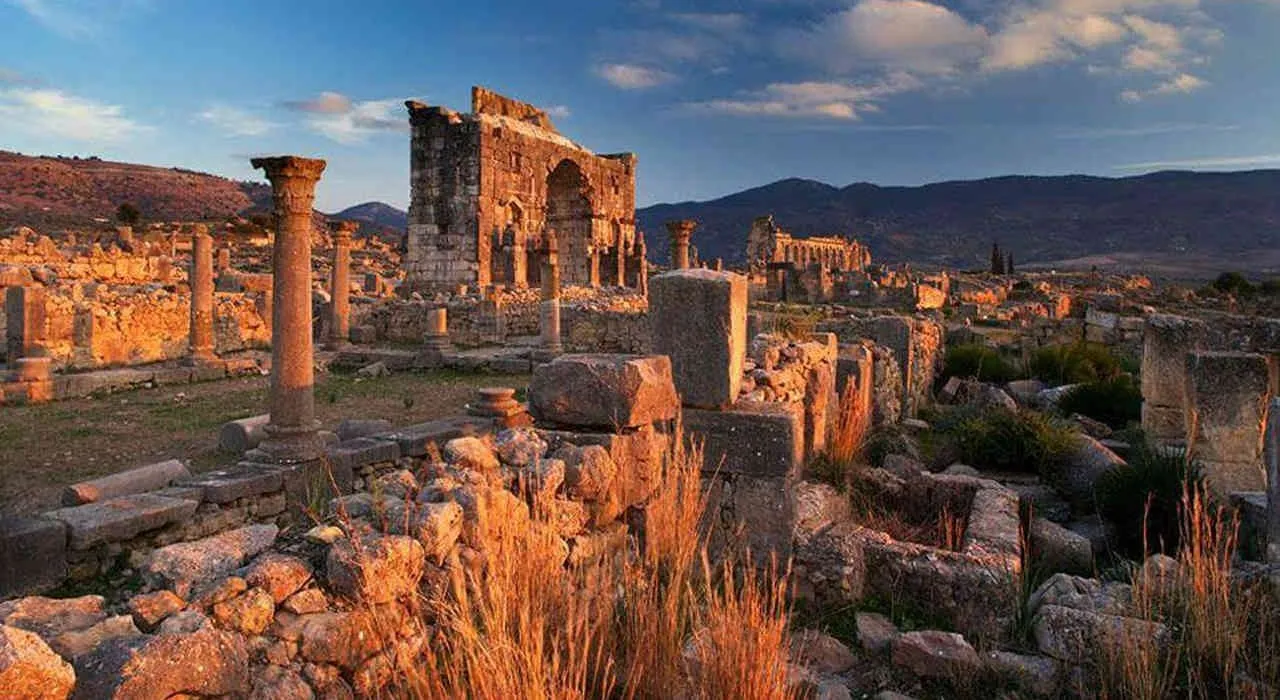
Continue north to Volubilis, a UNESCO World Heritage Site preserving substantial remains of an important Roman-era city in ancient Mauretania Tingitana. Allow approximately 1 to 1.5 hours to explore its streets, public buildings, arches, columns, and surviving mosaics.
Notable features include the triumphal arch, basilica and capitol area, Decumanus Maximus, and mosaic floors preserved within several former residences. Hiring an on-site guide can provide valuable historical context; guide fees and availability should be confirmed locally.
Afternoon: Rif Mountains to Chefchaouen
After Volubilis, continue north toward the Rif Mountains. The landscape changes again as the road passes agricultural valleys, olive groves, reservoirs, and increasingly mountainous terrain.
Arrive in Chefchaouen in the late afternoon. The town sits beneath distinctive mountain peaks and is best known to travelers for its compact medina and blue-painted lanes.
Check into a riad and spend the early evening around Outa el-Hammam, Chefchaouen’s central medina square. A rooftop terrace is a good place to watch the changing evening light over the town and surrounding mountains.
Day 8: Chefchaouen to Tangier
The final day combines a few hours in Chefchaouen with the transfer to Tangier. If you have an afternoon flight or ferry, check the departure time carefully before deciding how much sightseeing to do in the morning.
- Approximate distance: 115 km
- Estimated driving: About 2 hours under normal conditions
- Possible drop-offs: Tangier Ibn Battouta Airport, Tangier Ville Port or a Tangier hotel
Morning: Explore Chefchaouen’s Blue Medina
The blue-painted houses and alleys are Chefchaouen’s visual signature, although explanations for exactly when and why the practice became widespread vary. Rather than focusing solely on photographs, allow time to explore the small medina, markets, squares, and mountain setting.
- Outa el-Hammam: The central square sits beside the kasbah and Grand Mosque and is surrounded by cafes and restaurants.
- Ras el-Maa: Walk toward the eastern edge of the medina to see the spring-fed watercourse and views back toward town.
- Spanish Mosque viewpoint: The uphill path beyond Ras el-Maa leads to a viewpoint overlooking Chefchaouen. Allow enough time for the climb and return journey.
Going out early provides quieter streets before many day visitors arrive.
Afternoon: Chefchaouen to Tangier
Meet your driver with enough time to account for traffic and unexpected delays. The road continues through northern Morocco toward Tangier and the Strait of Gibraltar. Travelers following the country in the opposite direction may use the same northern corridor as part of a 5-Day Desert Tour from Tangier to Marrakech via Merzouga.
Your final drop-off can be arranged for:
- Tangier Ibn Battouta Airport (TNG): Allow the airline’s recommended check-in time in addition to the road transfer from Chefchaouen.
- Tangier Ville Port: Useful for applicable passenger ferry services. Verify your ferry’s exact departure port before traveling, because Tangier Ville and Tanger Med are separate terminals and are not interchangeable.
- Tangier city hotel: The best option if you are extending your trip to explore Tangier’s medina, Kasbah, American Legation, Cape Spartel, and Atlantic coastline.
Is 8 Days Enough for Marrakech, the Sahara, Fes & Chefchaouen?
Eight days is enough to complete this route, but it should be considered an active itinerary rather than a slow holiday. Days 1 through 4 combine moderate road journeys with sightseeing, while Day 5 is a substantial transfer. Day 6 provides an important break from long-distance driving before the journey continues north.
This itinerary works particularly well for first-time visitors who prioritize variety and want to finish in northern Morocco. Travelers who prefer slower mornings, extensive hiking, multiple nights in each imperial city, or more time in the desert would benefit from adding two or more days.
Alternative Morocco Tours & Starting Points
Not every traveler arrives through Marrakech. Morocco’s major transport hubs make it possible to adapt the same desert and imperial-city highlights to different starting points.
- Tours From Marrakech: Options include shorter Sahara itineraries and a 5-Day Desert Tour from Marrakech to Fes via Merzouga. Travelers staying in Marrakech can also consider an Essaouira Day Trip from Marrakech or an Ourika Valley Day Trip from Marrakech.
- Tours From Fes: Fes is a useful starting point for Sahara crossings and itineraries linking northern and southern Morocco.
- Tours From Casablanca: Travelers flying into Casablanca can begin a national itinerary there, including a 5-Day Desert & Imperial Highlights Tour from Casablanca.
- Tours From Tangier: Tangier is convenient for travelers entering northern Morocco by air or ferry and continuing toward Chefchaouen, Fes, and the Sahara.
Practical Planning for an 8-Day Morocco Road Trip
What to Pack
This itinerary crosses markedly different climates. Packing layers is more useful than preparing for one type of weather, especially during spring, autumn, and winter.
- Layered clothing: Lightweight daytime clothing plus a fleece or jacket for mountains and cool desert evenings.
- Comfortable footwear: Broken-in walking shoes with reasonable grip for medinas, archaeological sites, and rocky viewpoints.
- Sun protection: Sunglasses, sunscreen, a hat, and a reusable water bottle.
- Basic travel health supplies: Any personal medication, motion-sickness medication if required, and oral rehydration products.
- Electronics: A suitable Morocco-compatible plug adapter, charging cables, and a fully charged power bank.
- Light scarf or shawl: Useful for sun, dust, cool evenings, and situations where more modest clothing is appropriate.
Cash, Cards & Tipping
The Moroccan dirham (MAD) is the local currency. Cards are widely useful at many larger hotels, restaurants, and businesses in major cities, but cash remains important for small shops, rural stops, local cafes, tips, and some attractions.
Withdraw or exchange enough money before remote sections of the trip rather than assuming an ATM will always be convenient. Exchange rates fluctuate, so check the current rate at the time of travel instead of relying on a fixed conversion.
Tipping is customary in many tourism and hospitality situations but varies with the service provided. Drivers, local guides, camel handlers, camp teams, and restaurant staff may all receive tips when service has been good. Ask your tour operator for current guidance if you want an appropriate range before departure.
Private Driver vs. Self-Driving
A private driver makes an itinerary this fast considerably easier because navigation, parking, and long transfer days are handled for you. It also gives the group flexibility to stop at viewpoints or take breaks without worrying about the next section of road.
Self-driving is possible on the principal paved roads, but drivers should be comfortable with mountain bends, variable traffic, roadside activity, speed enforcement, and finding parking outside historic medinas. The off-road desert circuit should only be attempted with an appropriate vehicle and local route knowledge.
Accommodation Strategy
Changing accommodation almost every night makes location important. In Ouarzazate and Dades, prioritize easy road access. In Fes, staying in or close to the medina is convenient for Day 6, although vehicles cannot enter many pedestrian sections. In Chefchaouen, check whether your accommodation requires carrying luggage up steep lanes or stairs.
For the Sahara, confirm the camp’s bathroom arrangements, hot-water availability, electricity, luggage transfer, camel or 4×4 access, and winter bedding before booking. Amenities differ significantly between camps even when they use similar marketing descriptions.
Frequently Asked Questions
Is this 8-day Morocco itinerary suitable for families with young children?
It can be, particularly with a private vehicle that allows flexible rest and bathroom stops. Day 5 from Merzouga to Fes is the main challenge because it involves a long period on the road. Bring snacks, water, offline entertainment, and appropriate child-restraint equipment, and build additional breaks into the schedule.
What is the advantage of ending in Tangier instead of returning to Marrakech?
The principal advantage is avoiding a long return journey south. Tangier provides onward air connections and ferry options to Spain, making a one-way Marrakech-to-Tangier itinerary particularly convenient for travelers continuing into Europe or departing from northern Morocco.
Can I self-drive from Marrakech to Tangier via Merzouga?
Yes. Most of the intercity journey uses paved roads, and experienced independent travelers can rent a car for the route. However, navigation, parking, mountain driving, long-distance fatigue, and the Merzouga off-road circuit require additional planning. Avoid driving unfamiliar rural roads after dark when possible.
How cold does the Sahara get at night?
Winter nights around Erg Chebbi can become very cold and may approach freezing during colder periods. Even outside winter, temperatures fall substantially after sunset. Bring warm layers and confirm what bedding and heating, if any, your camp provides; heating should not be assumed simply because a camp is marketed as luxurious.
How much luggage should I take to the desert camp?
A small overnight bag is usually more convenient than taking your full luggage into the dunes. Keep warm clothing, toiletries, medication, camera equipment, and other essentials with you while the main suitcase is transferred or stored according to the camp’s arrangements.
Do I need a guide in Fes?
A guide is not mandatory, but a knowledgeable licensed guide is particularly valuable in Fes el-Bali because of the medina’s complicated pedestrian layout and the historical context behind its religious buildings, craft quarters, markets, and architecture.
Should I book an afternoon departure from Tangier on Day 8?
Allow generous time between leaving Chefchaouen and a flight or ferry. The nominal road journey is around two hours, but traffic and other delays can occur. Add the airline or ferry operator’s required check-in window and confirm which Tangier port your ferry uses before setting your departure time.
Final Thoughts on This 8-Day Marrakech to Tangier Itinerary
An eight-day journey from Marrakech to Tangier via Merzouga is one of the most varied ways to cross Morocco without retracing the same route. In a little over a week, it links High Atlas passes, earthen kasbahs, palm-filled valleys, Sahara dunes, the historic streets of Fes, Roman Volubilis, the Rif Mountains, and Chefchaouen before reaching the country’s northern coast.
The key to making the itinerary enjoyable is realistic pacing: leave early on transfer days, keep Day 5 flexible, allow a full day for Fes, and avoid scheduling a tight flight or ferry connection immediately after the Chefchaouen drive. With those logistics accounted for, the linear route offers a practical introduction to the remarkable geographical and cultural diversity between southern and northern Morocco.